Old people. Black and white film. Montana. Nebraska.
These may not sound like a winning cinematic combination. Where are the young beautiful things? Where is the sun, sand, surf, or dense metropolis?
“Not here,” is the answer, and for Nebraska, this is not a problem.
Sure, I was the youngest person in the smallest room up the top of the stairs in admittedly the elderly’s favourite cinema in Wellington, the Lighthouse Petone, but I gave this film a go and was all the better for the experience – even if the more… mature people in the audience would occasionally talk as if their hearing aids were switched off.

The film follows Woody Grant (Bruce Dern) who is convinced he has won a million dollars from a magazine sweepstake, and so decides to go to their head office in Nebraska to collect. At first he heads off on foot to collect it, but is brought back by the police or his frustrated family. Eventually his son, David (Will Forte), decides that the only way to get this out of Woody’s system is to take him to Nebraska himself. On the way there, they stop in at Woody’s old home town, and revisit his past.
There’s not much to it, but there is. It’s about small town family values and misunderstandings; about sons getting to know their fathers and how much smarter the wives are than their husbands. It’s about exploring the past and fearing the future. And it’s great.
Dern is incredible as Woody, but Forte as David, with his long suffering eyes and downtrodden demeanour who is the most relatable character. And June Squibb, as Dern’s unstoppable and long suffering wife, gets the choicest and dirtiest lines of them all.
The black and white makes Midwest small town America look a depressing place to be, making the earth seem cold and dead rather than green (or even brown), and the fact everyone is wrapped up like midwinter (though there is no snow I saw) makes the scenery even bleaker and colder. Harsh times have befallen the smaller towns, as with everywhere, and as the film focuses on the older generation, most seem relatively comfortable with their lot and make the most of things.

But there is a darker side to life, some laced with humour, and there are revelations and emotions, not all of which are actually dealt with but all of which are handled with a natural sense of realism.
It’s hard to write a great deal about this film as there is really not a lot to it – well, not a lot if I want to steer away from spoiling anything. It is funny; it is sad; and it also makes all of its characters relatable and understandable, if not always likeable. And it is great seeing an older cast filling most of the roles, though not everyone is quite up to Dern’s level of acting competence.
Nebraska was a wonderful way to spend two hours, though I suppose, considering its subject matter, its black and white nature, and its small story, that few people will get the chance to enjoy it.
Verdict: Nebraska came along at the right time and left a warm fuzzy feeling in my Midwest. I thought Dern and Forte were both incredible, Squibb a firecracker (as it were), and the whole film left me feeling, if not uplifted, definitely contented. 9 compressors out of 10.
The press for Keanu Reeve’s latest flick, 47 Ronin, has been brutal, with many expecting it to be the box office bomb of the year even though the year has barely begun.
Still, the promise of a Japanese tale mixed with martial arts and samurai and magic did have an appeal, and the vehement exhortations of a few people that this would be an awesome film convinced me that I should at least give it a go. And so, give it a go I did.
And it was not that bad. Well, not bad in that it was not painful and not laugh out loud terrible. It started off moody and atmospheric, with Keanu’s bland expressionless acting as Kai mixing well with the tone of feudal Japan and its strict hierarchy and social mores. A bit of confusing and rather dull backstory brought us through to today where a hunting party meets a wild and mythical creature on the rampage. An exciting fight led to a slow return to town, the introduction of the love interest, and a whole lot of tedium…
Yeah, it got very, very slow. The bad people are introduced with no real flair or motive, the respected Shogun comes around and proves he is an idiot, samurai go rogue and very eventually get pointlessly mystical weapons, and then there are a few big fight scenes with the big baddies which end surprisingly quickly, and then there is an ending which drags on and on for what seems like even longer than the ending to Return of the King.
There are nowhere near as many dragons as the trailer seemed to imply there was; some characters are clairvoyant at times and criminally stupid the next; and emotions appear to be only for women, and even then, it is just being mostly pathetic.
But even though it is mostly flat, even if the jokes are mainly about fat people and are telegraphed a mile away, even if the martial arts and swordfighting is fairly minimal, still it has the atmosphere of a mythical Japan that probably never existed except in the minds of Japanese scribes. The 47 Ronin of the title are more or less redundant in their own story (I can barely picture the faces of more than five…), but the Japanese atmosphere and the structure of the story are intriguing, even if the execution is fairly ordinary. And then there is the bizarre 3D which looks okay but appears to put long red lines across the face of the main love interest – not a good look for Kai’s love interest.

Considering how wonderful films like Hero and Crouching Tiger, Hidden Dragon were (even if the latter is not the quickest film either), its even more disappointing that 47 Ronin, with all the promise of fighting and adventure the title implies, is so relentlessly dull. More fighting, less scenery should have been the battle cry, but instead the cry is a whimper, and the battle is mainly against sleep – and annoying people talking incessantly behind me. Again.
Verdict: It wasn’t as bad as I was anticipating, but 47 Ronin was definitely not great. White man comes to save Japan again, and does, though with a d!ck for a Shogun, I am not sure it really deserved it. The film looks good but feels empty – an opportunity missed. 23 Ronin out of 47.
Sitting in a room filled with gangs of blokes or Hutt couples, I was expecting that the crowd at least would guffaw loudly if I didn’t manage to quite get into the second Anchorman film. But if I was looking to them for amusement inspiration, I was searching in vain, as only mild mirth escaped their lips as the movie slowly, slowly trundled along.

Anchorman 2 brings the cast of Anchorman: The Legend of Ron Burgundy back ten years after the original for another look at the past. Things have changed though, and it’s no longer the 70s and Farrah Fawcett hair. No, now it’s the 80s, and the advent of 24 hour news, and Ron and his gang are there at the forefront.
It’s just a pity that the jokes aim for satire rather than for laughs. Making well observed comments about the nature of the current news media through the infancy of non-stop coverage is very clever, but that intelligence does not really translate into laughs. For that, the film relies on scenes about Black people, going blind, friendships with sharks and off screen anchor rivalry. None of these are really that funny, with the most amusing interaction being that of Brick (Steve Carrell) and a potential girlfriend (played by the awesome Kristen Wiig), though even there, the pacing flags in what is meant to be slow and painful interactions.

Part of the problem is also that Ron himself spends so much time out on his own, away from his wife Veronica Corningstone (Christina Applegate – there was a disturbing lack of her there) and from his network news team. Will Ferrell can be a funny guy, but he seems to be most amusing when he is interacting with others or in scenes where others can react to him; on his own, his overblown presence and shouting is just a bit annoying.
Noone really shines in this film either. There is a (perhaps intentional?) tired quality to the look and feel of the film and the performances. The ridiculously good looking James Marsden seems to try his utmost in his small role, but it seems sad rather than funny. The worst example however is Harrison Ford, in spectacularly grumpy form and who almost seems resentful at being forced to participate in this film – or at least, there is nothing charismatic or likeable in the flat performance he delivers.
Still, there are the odd laughs. The dinner scene is so stupidly offensive as to be occasionally hilarious, and some of the more insane news stories are plain crazy. But overall, there is too much time spent on the slow stuff and not enough on building the world and the characters. Even the obligatory news anchor team showdown outstays its welcome about 20 seconds into the first confrontation, even if the wonderful Marion Cottillard makes a welcome cameo.
I left the cinema not waiting to see if the credits held any easter eggs, and from the slow movement of the rest of the audience, I could tell others didn’t want to stay either, but weren’t energised enough to get up quickly.
Verdict: Anchorman 2 is a film 10 years coming and unfortunately it’s not really that good. Without the petty rivalries and one up manships and sexism of the original… well, it is obviously very hard to generate real laughs. 5 black panthers out of 10.
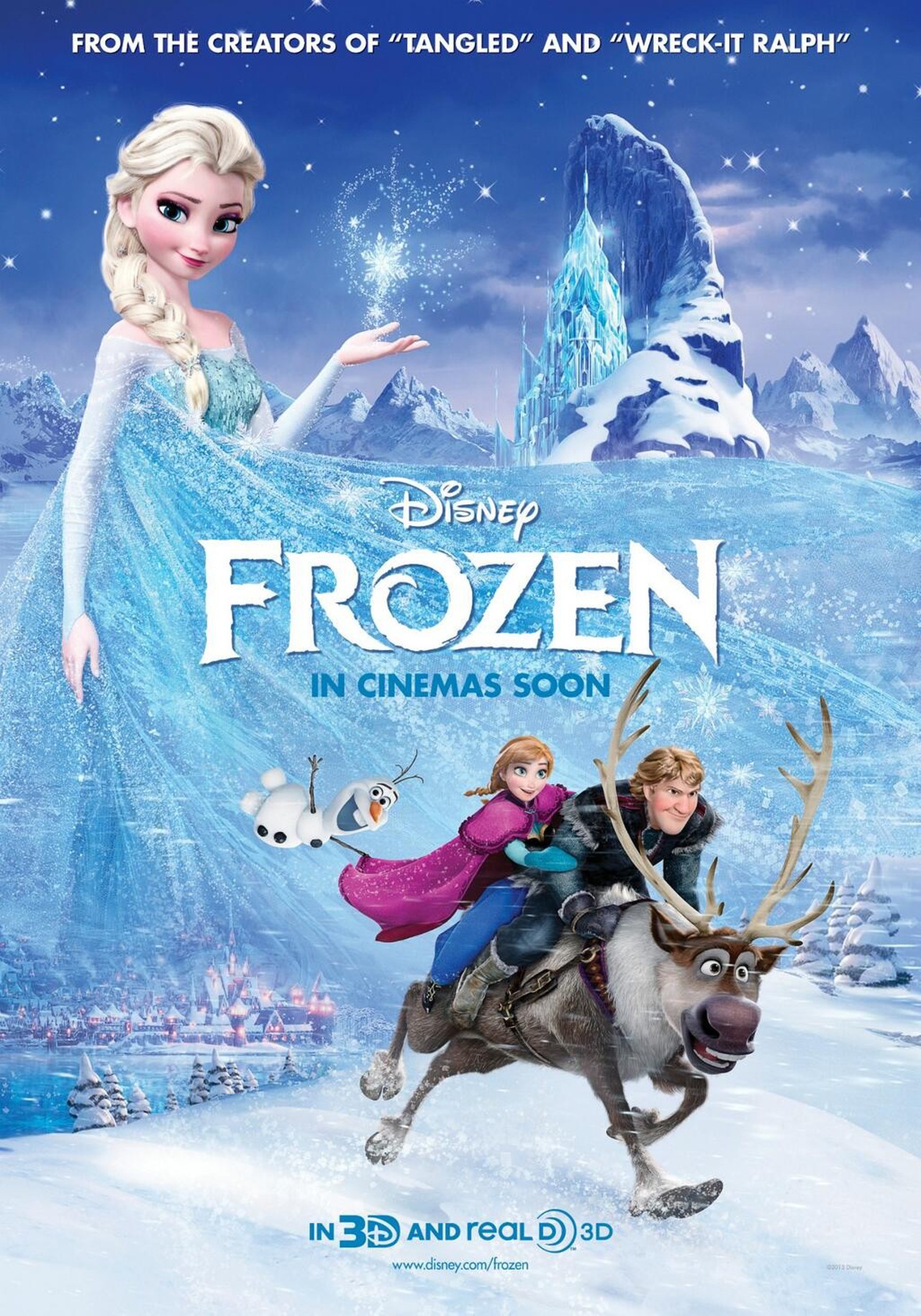
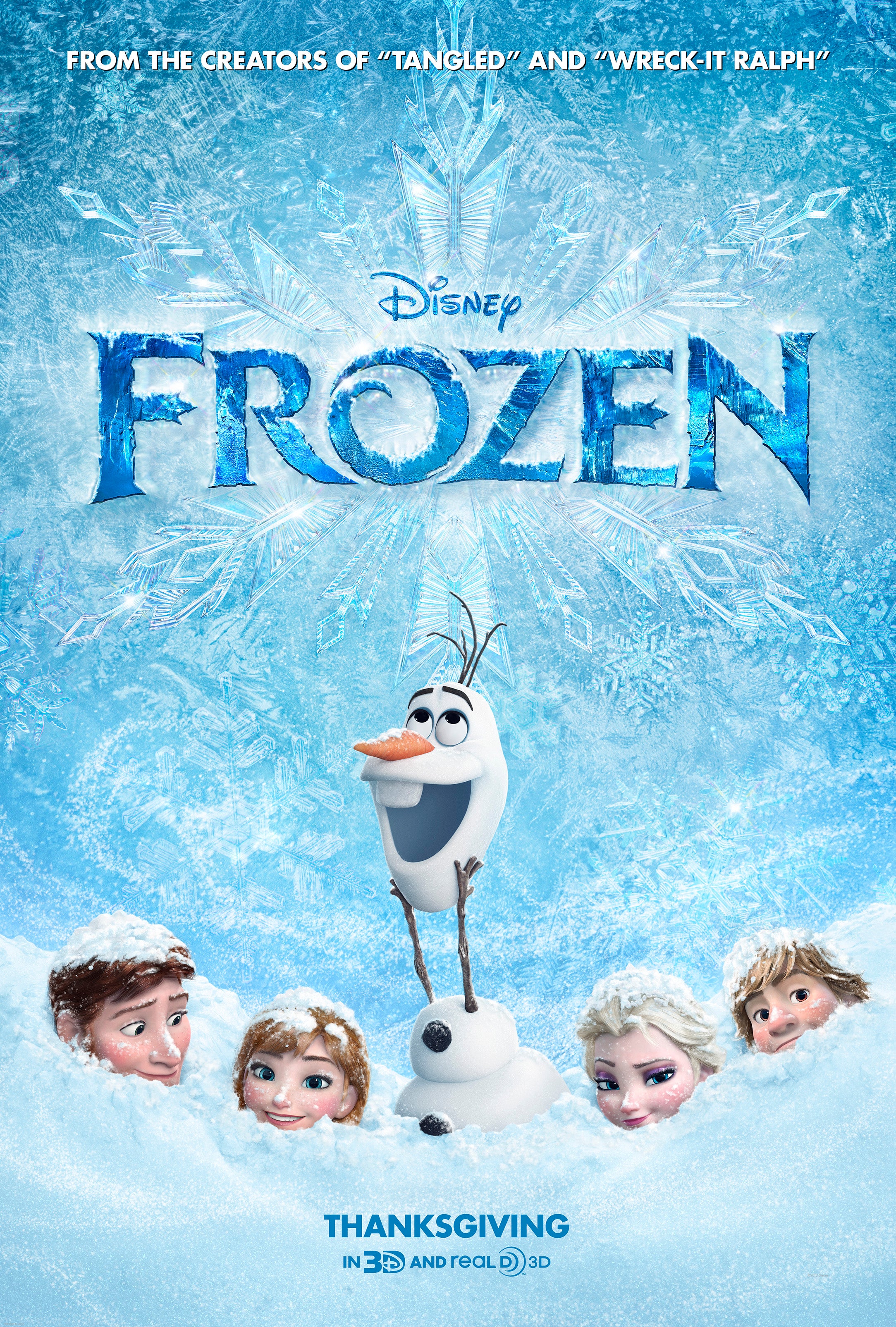
There are a lot of songs in Disney’s latest movie Frozen.
And to be honest, as song followed song in rapid succession in the first few scenes of the film, I began to panic somewhat. Not because the songs were bad or sung poorly (not in the least), but more that most of the songs seemed fairly unremarkable, and I hadn’t quite expected a musical.
But soon the rush of songs slowed, and the story came out, and little by little, my heart warmed to the story of a Princess, her sister who becomes Queen and then runs away as the common folk discover her ice powers, and their encounter with a whole bunch of men that help and hinder them along the way.
And I laughed. Or at least smiled broadly. When Olaf the Snowman finally appears, his sunny disposition and enjoyment of warm hugs had me completely in love with him, though that infatuation wore off as his character had less and less to do. I was stunned into silence when Queen Elsa, voiced by Rachel’s Mom and Wicked! star Idina Menzel, belted out the most memorable song of the movie, "Let It Go".
I smiled again when Princess Anna (voiced by the amazing Kristen Bell) encountered the Nordic Sauna of doom. And I warmed to Kristof (another Glee alumnus Jonathan Groff) as he talked with and for his mighty moose.
Of course, there are quite a few things that have to happen in this kind of movie, and I was a little disappointed in the way (and I will try not to spoil too much here) the love triangle that develops, opting for a fairly story book kind of resolution instead of actually dealing with an emotional choice. But then, perhaps I was just lulled into a false sense of “more” from all the wonderfulness that had come before. Sure, the barrage of opening songs gave me pause, and the Rock Trolls are cuter than they are interesting (their song was probably the worst), but almost everything else in the film clicked with me – and I am pretty certain I am not the target audience.

And the animation was amazing and everything was beautifully rendered, mainly in the scenery and the imaginary characters more than the supposed humans and animals. The theme of snow meant there were some gorgeous crystalline structures, and the snow flurries as characters plowed through the countryside were incredible in how little they looked fake.
Overall then, and without carrying on for the sake of it, Frozen is a beautifully realised film, with fantastic performances and wonderful characters and… well, I loved it.
Verdict: Disney made me happy and, with Frozen, brought me a White Christmas tale I actually enjoyed. 4.5 carrott out of 10.
The hype around The Hobbit: The Desolation of Smaug is pretty intense, most seeming to focus on how it is a great film because it is faster and shorter than the first Hobbit movie. That is not to say the first is bad and, I have to admit, it does not mean the second movie is that great.
Yeah, unfortunately, the hype made me a little disappointed with The Hobbit: The Desolation of Smaug. I was expecting too much I think. And that was probably just my fault.
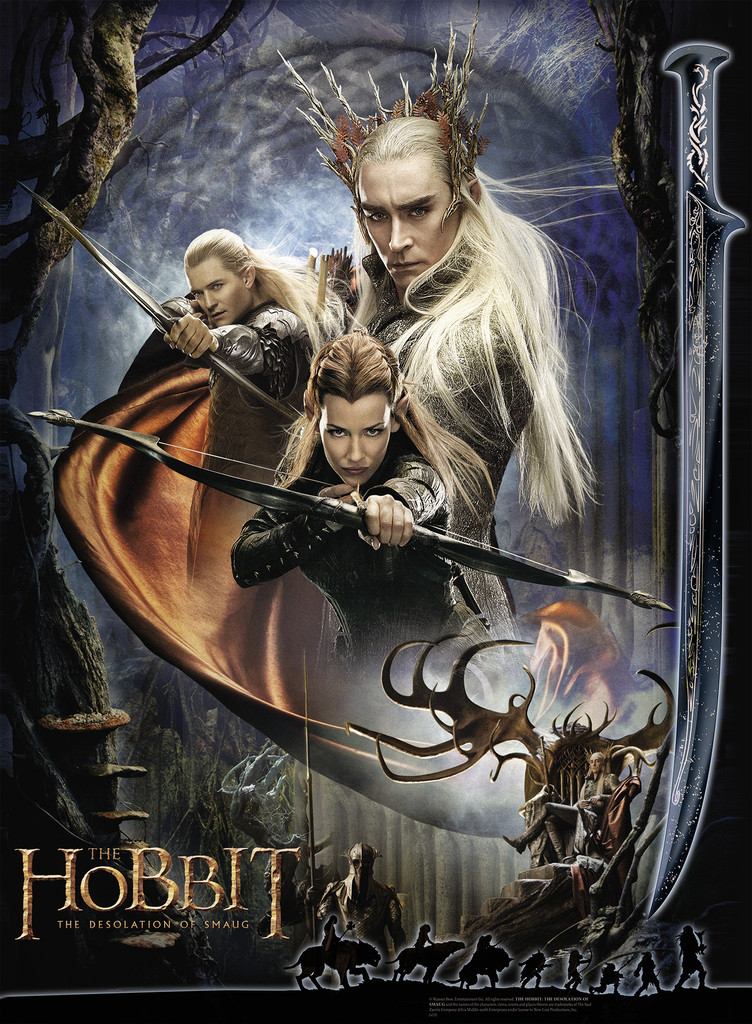
The film follows Bilbo and co from where we left them in the last film over to the Lonely Mountain and their first encounter with the terrible dragon, Smaug, who has taken the Dwarf’s home as his own. The voyage takes them through Mirkwood forest, a battle with large spiders, an encounter with a bunch of completely arrogant Elves (apart from Evangeline Lilly’s Tauriel, who I really liked), another battle but this time with Orcs, a visit to a city on a lake, and finally the encounter with Smaug.

So there is really quite a lot going on, and it all proceeds at a fair clip. There is also a back story about Gandalf (Ian McKellan) and his adventures in a castle elsewhere in Middle Earth, the back story which will eventually lead to that other series of movies, the Lord of the Rings – that story is quite exciting if, ultimately, it will be played out at another time.
Characterwise, there is very little to say about the Dwarves. They don’t really interact a lot though they get into a lot of action. Bilbo is kind of the same. Of the new characters, Tauriel is by far my favourite (even if she is an elf), having an actual bit of backstory and some emotion – so of course, she has to be one of the characters that is not actually in the book. Even Legolas (Orlando Bloom), who was quite nice in the other set of films, seems a bit older and less pleasant even though this is meant to be set 80 years before. His arrogance (and that of most elves) is a complete turn off, though perhaps that actually is in keeping with the thrust of the books which is very pro-Dwarf.

Even Stephen Fry, master of the English language, has a bit of a tepid character, as do most of the citizens of Laketown. When tragedy is about to befall them, I kind of wanted it to come quickly and put an end to them all.
But the dragon is cool. I could not hear Benedict Cumberbatch at all in Smaug, but he is there, and the dragon is menacing. Pity then that their conflict is a bit drawn out and so ultimately a bit boring.

Actually, most of the action sequences do tend to be on the long side, and like in the first film, play out a bit like video games – exciting and frenetic, but a bit forced and convoluted. And its also a little disconcerting when the special effects, mostly excellent, look a bit terrible, like when Legolas rides off into the night on his horse across a bridge. Partly it might be the high frame rate projection, which has been internationally been panned and still seems to make some things look quite fake (as to them being fake but looking real). Nonetheless, with the amazing 3D bee and the incredible Atmos sound system, it was definitely worth seeing the film at my beloved Embassy even if, from time to time, the extreme sharpness and clarity and high techery of the image was to the films detriment.
Verdict: The audience laughed and loved it and I was interested throughout, but on leaving the cinema, I realised I felt a little bored through some of the bigger action sequences of the Hobbit: Desolation of Smaug, and almost everyone is a bit irritating. Thank heaven for Gandalf, Tauriel and to some extent Bilbo – though to be honest, I am not yet completely convinced by Martin Freeman as the hero just yet. But there is still one more film to go. 8 arkenstones out of 10.
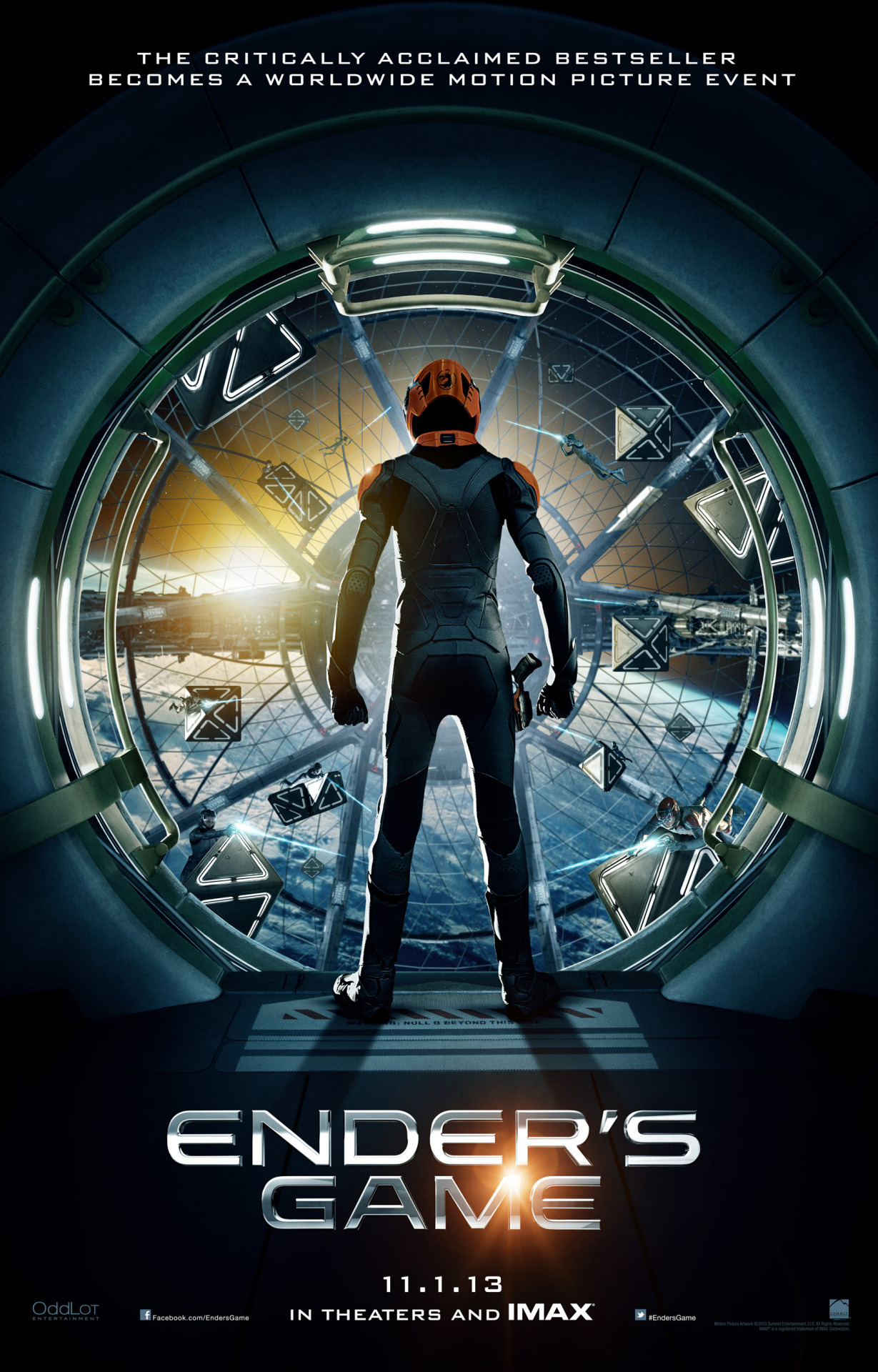
The hype around the movie version of Ender's Game has not been that positive, though mostly the negativity focussed on the opinions of the book's author rather than the film itself.
Of the film, I had heard little, though the previews painted a picture of a film that might be a little... dull (in comparison with something like the Hunger Games) but was going to be visually spectacular. Still, I was keen to go, even though I was a little uncertain how the screenwriters would adapt the book to meet the needs of the screen and whether I would appreciate how they had interpreted the fight and battle scenes.

And unfortunately I didn't.
Its not the actors' fault - well, except for Ben Kingsley, but more on him later. Harrison Ford plays gruff Colonel Graff, determined to mould young Ender Wiggin (Asa Butterfield, big eyes dewy to maximum effect) into the hero that will save humanity from the Fourmic race (called the Buggers in the books, but the name was changed for political reasons). Ender is trained in schools on Earth and in orbit on how to be the best commander the world has ever seen, to win no matter the cost, but to not be unnecessarily cruel because, in the paraphrased words of Wiggin himself, to know the enemy is to love them. Of course, it doesn't help that the term "winning" in this case is a moving target. When fighting human opponents, winning tends to mean scoring more points in the battle simulations (and the zero g engagements are quite well done); but noone really defines what "winning" is against the Fourmics.
As the battles get bigger and more intense, the film is meant to ratchet up a notch, but unfortunately (and this may just be for a New Zealand audience), the appearance of the legendary Mazer Rackham (Ben Kingsley) actually detracts from the escalation going on in the film. His strange Australian / South African accent is distracting yet forgivable until he explains to Ender that he has a facial tattoo as his father was a Maaaari, complete with Australian twang and all. Perhaps he was a Mozzie or something, but even the GC cast were, I am sure, respectful of Maori pronunciation. After being quite silent and engaged up until that point, the audience all burst out into an embarrassed round of nervous laughter. And from there on in, every time Rackham spoke, it was hard to keep a straight face.

The ending of the film, like the beginning, was a bit rushed and stumbled a little. I did not think that things were made particularly clear as to what exactly was going on. The book has a lot of threads that the movie just didn't have the time to cover, but the movie seemed to refer to these an awful lot, even when we knew there would not be any pay off. Ender's brother and sister (who I found had the most annoying hair imaginable) play a strange and important role in Ender's life, but we get more scenes of a computer generated Valentine Wiggin than we do of the real thing (this is not a bad thing in my opinion). And I am not entirely sure what to make of the Fourmics and their civilisation in the end either - am I meant to be impressed with it or something?
Some of the deviations from the book annoyed me but really had little impact on the story that I could see: the fact humanity had faster-than-light ships; the strange reason why the launch pad from earth seemed to be somewhere in the Canadian Rockies (why?); Ender seemed to be getting a girlfriend; and Ender was not the youngest or smallest kid in the school.
Still, the most jarring aspect of the film was Kingsley's accent. The rest was impressive to look at, and though the pacing lagged at times, it kept my interest throughout the running time. But ultimately, at the end of the film, it feels a little empty - why should we feel what Ender feels? Here's hoping that there are no sequels that will try and explain it to us.
Verdict: Ender's Game looks amazing, but doesn't quite manage to turn the source novel into something as good as the Hunger Games. Kingley's accent is appalling (why not just hire Cliff Curtis?) though everyone else on board is solid and fine, and Butterfield does quite well considering the range of emotions he is asked to feel. But overall, the film doesn't quite achieve victory, no matter what tactics Wiggin may use. A 7 on a D10.
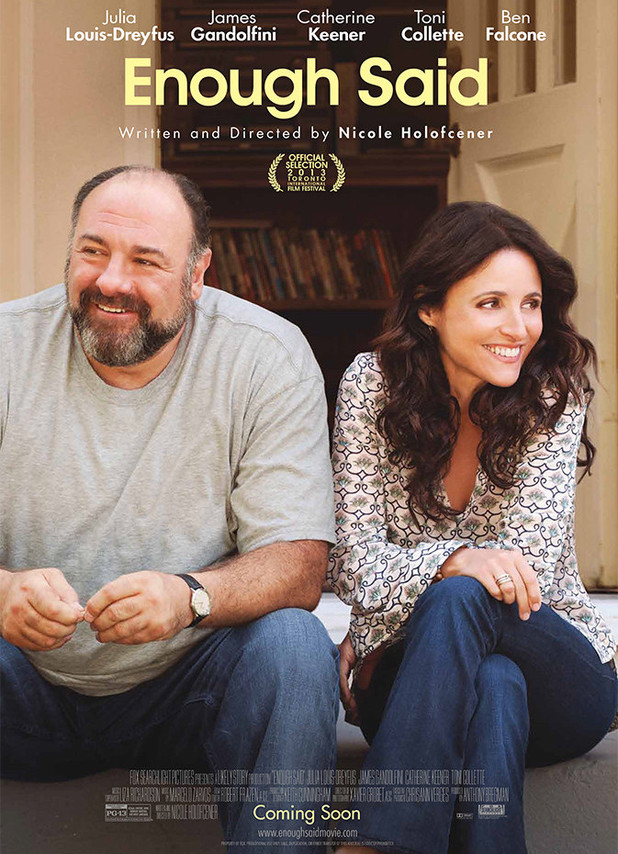
Perhaps unsurprisingly, there were not a lot of people who wanted to come along with me to a movie about two divorced middle aged people finding someone.
Even when I waved the fact that James Gandolfini was in it, the Elaine (Julia Louis Dreyfus) factor seemed enough to put others off.
Which was a shame as Enough Said is actually really sweet. Dreyfus plays Eva, a masseuse, who encounters Albert (Gandolfini) a man in a similar situation to her and who shares her (not neurotically Elaine) sense of humour. They hit it off, but when Eva unwittingly becomes friends with Albert's ex Marianne (played by one of my favourites, Catherine Keener), Eva tries to find out what went wrong with the relationship without letting either of them know that she knows them both.

It's all incredibly predictable from there, so there are no real surprises how things turn out; and the above is what is in the trailer so again I am not really giving things away.
What livens things up a bit are the great performances. Albert is played as a loveable slob, and Gandolfini and Dreyfus make you see what they see in each other and why, after a little while, they begin to connect - and disconnect, as things progress. While I like Keener, I was not quite so won over by Eva, though as the ex wife in the not-much-love triangle, perhaps that is the intent of her character. It was also brilliant to see Toni Collette playing a character with an Australian accent (better when Eva says she doesn't understand a word she is saying) though her fraught relationship with her husband and domestic help again seemed to make her a little less than likeable - and of course, as always with these films, she was noticeably absent whenever Eva had a crisis, as best friends seem wont to do in the movies.

Overall though, as mentioned, the performances are great, and the interaction (besides the aforementioned contrivances) seem natural. Eva's daughter and the daughters of all the other characters seem a little sketchy, perhaps due to the actresses playing them or perhaps due to the fact their storylines are so minor in comparison with that of Albert and Eva, but elsewise, its all pretty awesome.
And the film does not outstay its welcome either, finishing up after a sweet, amusing and occasionally painful 90 minutes.
But it leaves the big question unanswered: can James Gandolfini actually whisper?
Verdict: I don't need to write a lot about Enough Said. It's a well written rom com with some lovely performances from the leads even if the story itself is fairly straight forward - not that there is anything wrong with that. 7.5 rearranged items of furniture out of 10.