Saturday, June 16, 2012
The Case for Corporate Conundrums
Is it possible to make an interesting non-documentary movie of the recent economic crisis when so much of what actually happened appears incomprehensible, even to those who caused it all to happen? In Margin Call, Kevin Spacey, Jeremy Irons, Zachary Quinto, Demi Moore, Stanley Tucci and a few other well-known faces give it a go. And while there are no car chases (though there are some lovely cars) and most of the film takes place in fairly mundane offices, the film manages to convey a tense situation and at least tries to explain what, exactly, happened.
But no one really seems sure. In explaining the problem “as if to a child”, Quinto’s rocket scientist Peter Sullivan quickly lapses into econojargon that could well have been Klingon (or should that be Vulcan? Though at least then I presume it would have had to have made sense) though everyone else at the board room table seems to find his explanation sufficient.
My stab it at is this: traders decided to take a whole bunch of mortgages and lump them all up and sell them to other firms as long term investments that would pay interest and thus bring profit. How much interest would of course depend on the interest rates that the mortgage repayments were based, and the traders speculated on what those interest payments and therefore profits would be, buying them on the idea of long term gain and selling these lots for huge immediate profits. That meant that, in the here and now, some companies owned lots of these mortgage investments that had the value of the houses (and, long term, as the houses were paid off by the mortgagees, ought to make money due to the interest on the repayments). But of course, this was all based on the idea the mortgages would be paid back, but with the sub-prime loan scheme, where people could probably not afford repayments at higher interest rates and could just walk away from the property, that meant that the investment companies could just be left with houses that, while pretty, might not actually sell, meaning that the companies would have a huge amount of homes but not a lot else, least of all money to afford sports cars and high class hookers.
At least, that is how it all seems to work in my interpretation. Whatever the actual mechanics, the people running company in the film realise that the bubble can burst, and decide they would rather do that bursting and leave some other company holding the can, or the mortgages. This sounds a bit paranoid, and it is, and the moral implications of bursting the bubble, selling things now deemed to be worthless, and ruining the careers of those who knowingly sell “worthless” investments to other companies are the questions and decisions that generate all the tension.
Jeremy Irons plays John Tuld, the cold, calculating bad guy at the top, a role he has done before and done so well. Spacey meanwhile plays Sam Rogers, the morally torn middle man (again, nothing new for him), with Quinto’s Sullivan the open minded up and comer and Moore’s Sarah Robertson the ice queen accountant who fears she will be made the scapegoat. The main characters are all wonderful, my only real disappointment being the underuse of the awesome Mary McDonnell who appears only near the end of the film as Sam’s wife, with a plastic face and only a few minutes to make a mark.
The film shows the how the collapse happens (and tries its best to explain the way, though I was still a little unsure at the end of it), but then pulls up short of showing exactly what that “collapse” actually means. There are references to the future, to the implications, but there is no actual follow through. Perhaps though, that is because this is a film and not a documentary – Margin Call is all about the call, not what happens afterwards.
One of the hardest things to swallow is that several people during the film claim to have seen “this” coming all along, and that warnings were made, but it seems that the call to action was only made because an underling discovered it all. It is therefore a bit hard to feel any sympathy or empathy with any of the “higher ups” (though this might be a deliberate act on the part of the screenwriters), and it is also hard to feel much of a rapport with the “lower downs” too, considering they are all meant to represent up and coming greed an ambition. Still, with all the thesping talent on board, the actors do a sterling job of making documentary-fodder entertaining and gripping, even if, by the end of things, it still is not particularly clear exactly what went wrong – or, more importantly, why anyone had faith in or thought they understood what was happening in the first place.
Verdict: Margin Call is one of those movies that give actors the chance to act and be seen as good citizens informing the public about what went on in the most recent financial crises to hit Wall Street. The whole cast are on their best behaviour to fill out characters that are sometimes quite cliché (ruthless CEO, young ambitious middle manager shark; high placed woman who might have to fall on her sword) and to make sense out of something that even the most experienced traders and analysts seemed to not understand at all. And they all do a great job, though personally, I would have liked to have seen more of the “and so what happened next?” to really understand the impacts of what they actually did. 7 cents out evey 10.
Thursday, June 7, 2012
The Case for Fallen Gods
A warning: while I try not to be a spoiler of these things, some for this movie may pop up.
A wee while ago, there was a film by Ridley Scott called Alien. It was dark, broody and had a kickarse heroine. James Cameron came along a few years later and made an explosive, site-nuking sequel. And what followed has been a whole raft of movies that followed the adventures of Ripley (the merits of which are much debated) and then a few “prequels” that placed the condom-craniumed aliens on earth battling it out with different alien predators.
With Prometheus, Scott has come back to the Alien party, and he has decided to focus on a different aspect of the story: where did the spaceship upon which the alien was originally found come from? And, 30 years after his original movie, he now has an amazing array of special effects and talented actors and technicians to bring the story together.
And so the film looks incredible. The ship upon which our intrepid explorers find themselves is less industrial pipes, loose chains and dripping ventilations shafts, as, while we never see a cleaning crew, the shop is spotless, packed with the latest whizz-banging technology (though some of it is for boys only), including an artificial person that no one really seems surprised about.
I have to say that I found that one of the most jarring aspects of the film. While Prometheus obviously bases itself on the original Alien movie, there are some parts of it that really don’t seem to gel with the world the other films created, and, as a person who enjoys continuity in these sorts of things, I found some of the liberties taken a little hard to swallow. And then, there are other things that relly just didn’t make a lot of sense to me.
Besides the casual acceptance of the android, the fact this exploration of a far off world takes place at all, with no follow up, is the most bizarre continuity issue, especially considering the fairly high profile people aboard. Similarly, Weyland has yet to merge with Yutani, but company men and women are still calculating capitalist swine aware of the bottom line but apparently not aware that underlings should be sacrificed rather than top brass. I was also a little surprised when alien holographic security camera footage comes out of nowhere and is highly selective (and fortuitous) in what it shows.
There are other convenient discoveries and more obvious story developments that likewise left me a little cold. Speaking of cold, Charlize Theron’s ice queen corporate cow is completely awesome (even if she can only run in straight lines – “turn left!!”), but, like most of the cast, including the awesome Ildris Elba, is mostly wasted. I am a fan of Michael Fassbender, which is good, as his character David seems to dominate the entire film (more so than Noomi Rapace’s Dr Elizabeth Shaw, whom I believe is meant to be the star of the film) although I was a little unsettled that he played David as a morally ambiguous blond version of Star Trek: the Next Generation’s Data.
Prometheus seems more a step back than a step forward, cruising on the laurels of the original Alien movie, upping the number and type of creatures while subtracting a lot of the tension and atmosphere. I will be interested to read what others think about the film, as it might just be me who was a little underwhelmed by it all, though I did appreciate a lot of what I saw nonetheless.
Verdict: Prometheus came burdened with a lot of expectations, and I had kind of hoped those expectations would have made for a tighter, more well thought out movie. Instead, I thought Prometheus was a beautiful looking film, with a great cast nodding in the direction of the original Alien movies, but more often than not pointing in its own direction, one that I was not convinced that I wanted to go. 6 flamethrowers out of 10.
Wednesday, June 6, 2012
The Case for Being Back in Black
The Galaxy Defenders are back after a long hiatus and they are bringing with them… well, a lot of sentiment. And Jermaine Clement.
And Clement is awesome. If New Zealanders were tall, vile intergalactic gangsters with bodies constructed of smaller spider-like organisms (but that can somehow still lose arms), and who still seemed to be someone rather amusing who would blend in fairly well with the Flight of the Concords crew, then this is the form they would take.
It’s a pity then that the rest of the cast of Men in Black 3 just looks and feels older. Will Smith as J is as likeable as ever, but despite his strong physique, he seemed to be having a hard time carrying the weight of this film on his broad shoulders. Tommy Lee Jones is absent for a great amount of the film, and while Josh Brolin does a great impression of his Agent K, the repartee between J and K doesn’t really fire as once it does, the whole “wise and jaded mentor” thing not really working when K is (supposedly) younger than J.
Emma Thompson is along for the ride for a bit, and there are a few other faces that pop up from time to time, though for the most part, I found the secondary characters either unfortunately obvious, serving the needs of the story rather than being interesting in themselves, or else just irritating.
But, as mentioned, this is mainly Smith’s show, and as I always have time for him, I didn’t find the film itself that bad. In fact, the special effects are spectacular (the 3D version I saw had the odd effect that looked really good in the third dimension) and there are a few jokes in there (Lady Gaga taking Michael Jackson’s place in the wall of aliens) that made me smile, though some of the more “obvious” ones kind of fell totally flat.
I suppose that I was really mainly disappointed by the over-sentimentality of the film. I was expected a madcap ride of ridiculous adventures with crazy aliens and a bonkers storyline, and while I got some of that, I was amazed (in a bad way) how much cloying “sweetness” also made its way in and, if that was the film’s objective, how clumsily it was all put together.
And the less said about the alien clairvoyant the better.
Verdict: Men in Black 3 may save the Earth again, but it did nothing to make me think the franchise had been saved. I can watch Will Smith in almost anything, but this film was definitely at the lower end of that spectrum. Bright, flashy, and with an hilarious but still mortifying bad guy, the film had lots going for it, but got bogged down with a whole lot sappy stuff that took away a lot of the fun and replaced it with big doe eyes, probably alien ones. 5 neuralisers out of 10.
Wednesday, May 30, 2012
The Case for a Trio of Docos
It has been a fortnight of movie documentaries, with two of them part of the Edge Documentary Film Festival and the last a general release documentary, released generally due to its general appeal.
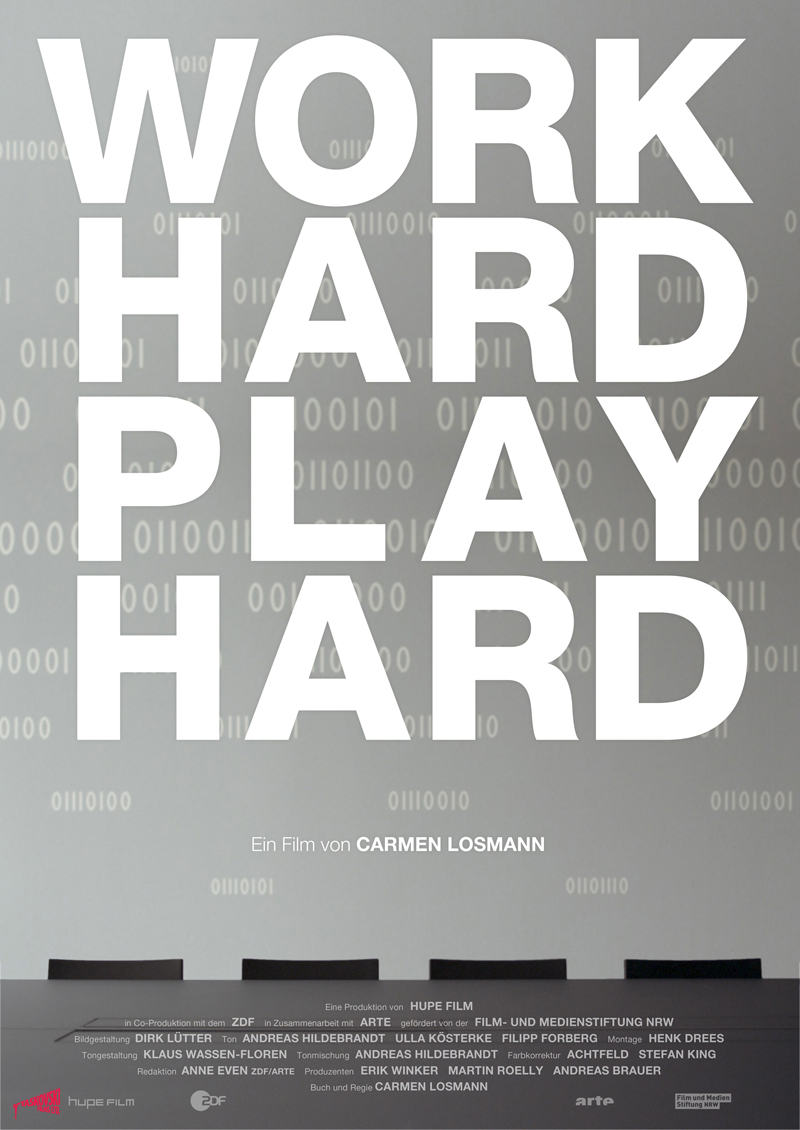
Work Hard, Play Hard was a German documentary about the role of Human Resources in that working environment (yes, this is one related to my profession). It started off examining the design of workspaces, moved to some team building exercises (bizarre as some of them seemed), then on to assessments of performance and career aspirations.
I am not sure if it was the German styling or if it was an amateurish documentary, but whatever the cause of its coldness and lack of insight, it was very disappointing. The most interesting one, the design of buildings and workspaces to make people want to come to work but, in the end, work was lacking one vital component - the reactions of the people who actually worked in those places. The "star" of workplace design was the Unilever building, and when the design became a reality, the documentary took us on a trip through its shopping mall-like layout and offered almost no insight as to whether anyone liked it at all. Perhaps this was meant to be a "damning with silence", as I found the new building appalling, but there was no conversation with anyone besides the designers.
And basically, the human touch, or the results focus, was completely absent. Considering the number of assessments that were featured, the fact there was no assessment of the interventions themselves was a major oversight, and ultimately made the value of the documentary close to worthless.
Not that there weren't some amusing bits: one woman who, after her performance she was assessed, was described as a cold woman with an inappropriate sense of humour, and her expression on receiving this news indicated she may also have had homicidal tendencies, though any murderous intent she may have put into action were, sadly, not shown.
Verdict 1: Work Hard, Play Hard was an attempt to shed light on what HR does, but ultimately, didn't work or play hard enough with the subject to make it worthwhile. 3 hotelling workspaces out of 10.
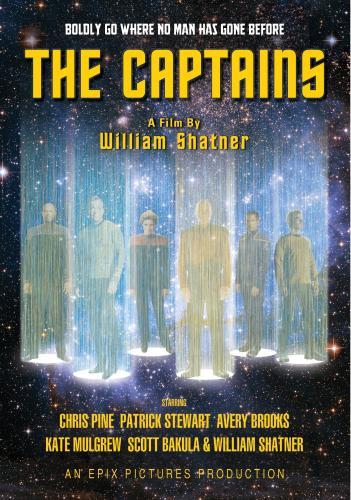
The Captains was Edge documentary number two, following William Shatner boldly visiting Captains of the Star Trek universe. My favourite Patrick Stewart (Picard), Avery Brooks (Sisko), Kate Mulgrew (Janeway), Scott Bakula (Archer) and Chris Pine (Kirk again) were all sat down next to the Shat himself, and on occasion, even allowed to speak.
That's a bit mean - Shatner did give everyone their chance to talk. But as writer, producer, director and every other sort of executive on the documentary, Shatner was calling the shots. Questions followed his unique style of questioning (sometimes badgering; poor Mulgrew); irritating music provided an overly emotional cue to every scene; and there was far too much singing despite the fact Shatner admitted that he was not much of one.
As expected, all the Captains seemed very nice people: Stewart was sincere (especially around his failed marriages); Mulgrew a tough cookie (though we got to see some cracks when she discussed the toll of her career on her family); Bakula was very laid back; and Pine was the most earnest in a "start of career" way. However, while Brooks was undoubtedly the coolest, all jazz music and mystical utterances, it seems only his body ever returned from his encounter with the Prophets/Wormhole Aliens of Deep Space Nine as he seemed completely off his rocker. Shatner failed to prise the man from his cold, dead piano, which was a mistake in getting anything sensible out of him.
Meanwhile, the Shat showed that he is every inch the Quincy Taggart at conventions, providing a show the audience would never forget, and also is a shameless sponsor plugger (who provided his private jet again?).
Verdict 2: The Captains was a hit and miss then miss again affair. There were some very interesting revelations in there, but the way the documentary was put together reminded me why no one went to see Star Trek V: the Final Frontier and the music was overwhelming, and Shatner loomed large over everything, his ego only occasionally allowing the others some time in the sun. 4 red shirts out of 10.
Finally, Shihad: Beautiful Machine followed the career of Wellington rock band Shihad, from humble beginnings to their chance to break into the US market, and their return to New Zealand following that disappointment.
I saw Shihad a while ago, and while I am not the biggest fan of their music, I do enjoy it. The film I enjoyed more. Funny, insightful, amusing, well put together, with appropriate use of music - the other documentaries could learn a lot about how to make an interesting documentary from this New Zealand offering.
The Shihad movie was a general release, playing to a packed mini-cinema at the Embassy. While one of the audience laughed like a man either unhinged (could it have been Avery Brooks?) or very familiar with the band, the rest of us laughed at the more obvious references and amusements, and the whole thing made me respect and enjoy the band even more.
Verdict 3: A short review of the film, but then, the film Shihad: Beautiful Machine can be summed up in one word: choice. 9 pacifiers out of 10.
Friday, May 25, 2012
The Case for Dictation
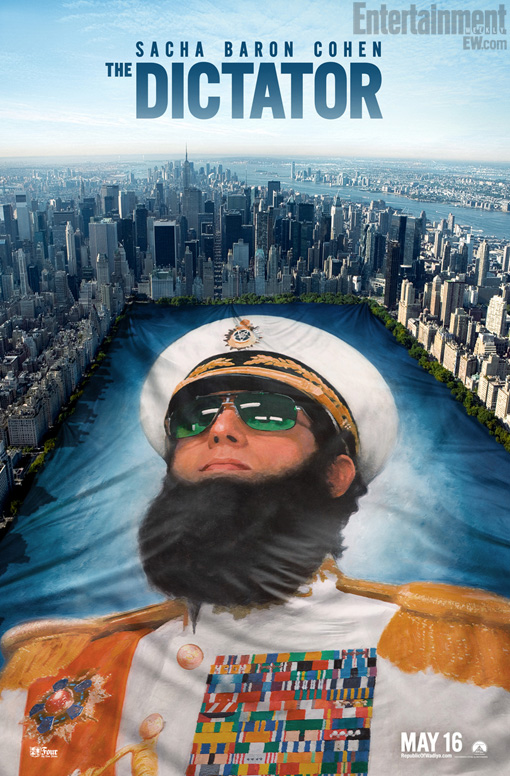
I went into Sasha Baron Cohen's latest offering, the Dictator, hoping it would not be same as his previous films. Not that it wouldn't cross the line of taste and political correctness many, many times, but more that it would do so in a completely scripted way, one where hapless victims were not either coerced into being offended or else given a gentle prod to let their own prejudices shine though.
In the end, I was relieved when the movie turned out to be an entirely acted affair, so any pain in the humour and observations were entirely deliberate.
Being the sort of comedy designed to offend, there are quite a few misses in amongst the hits. Shorn of his beard while visiting New York, Cohen's Admiral General is cast aside, unrecognizable, and he is forced to try and regain his position as brutal Dictator of a small, oil-rich North African nation. During his journey, he manages to offend, learn next to nothing, and have a few madcap adventures along the way.
Anna Farris and Ben Kingsley were the main supporting actors, and while Kingsley can make almost anything look dignified (almost), Farris was in her best Scary Movie, hapless heroine brand of "bad" acting so was both awful and strangely appropriate. But mostly, the lens was on Cohen and he pulled out any stops, including his own dignity, to get a laugh.
The Dictator is never going to go down as a comedy classic (say, as 40 Year Old Virgin is), but it did manage to elicit quite a few laughs along the way. There was lots of racism, sexism, anti-Semitism and a whole lot of other -isms, all designed to amuse and offend through excess and sheer audacity.
Really, for once, the marketing, some aimed squarely at NZ, was on the money - the film gave what it promised, and there were good bits that were not put into the trailer. And, for a crowd "pleasing" shocker film, that was exactly what the doctor, or the dictator, ordered.
Verdict: The Dictator was always going to be a guilty pleasure movie, and it did make me laugh. Will I see it again? Probably not, unless I stumble across it. Would I recommend it? Probably not, unless you appreciate Cohen's style. And how do I rate it? 6 Saddams out of 10.
Wednesday, May 16, 2012
The Case for Pale Shadows
It was a bit strange to walk away from a movie and feel like I had just watched a pilot for a TV series.
I mean, I know Dark Shadows is based on a TV series, and there are movies that are made to have sequels (like the awesome Avengers), but the ending of Dark Shadows and the (minor) revelations made in the last few minutes had me thinking that there would be more to come next week, and there was no guarantee that the next offering would be spectacular.
But then, the film itself was a bit of an odd one. The trailer focuses on the humourous parts of the film, mainly the culture clash of a 17th century man (well, Vampire) finding himself in the Hippie 70s, but the film is actually... well, not really that funny. It's light in places, but then dark in others; it's about true love and family, but also about the dark arts and there is a pretty high body count. The joys of the 1970s are played up to the hilt (the fashion, the hobbies, and there is a huge amount of era music), though ultimately there is no reason the film actually needs to be set in that decade at all (though it's probably because the TV series was).
Johnny Depp is as awesome as ever as leading man/vampire Barnabas Collins, but it is really Michelle Pfeiffer as his descendant Elizabeth Collins Stoddard who steals the show, despite her criminal under use. Helena Bonham Carter (as the wife of the director, Tim Burton perhaps?) is also along with a shocking red wig, and Eva Green vamps it up as a sultry yet scorned sorceress Angelique Bouchard. Meanwhile Chloe Moretz does a one-note disgruntled teenager (channeling Kristen Stewart, perhaps), and the rest of the supporting cast kind of get lost in the shadows (pun intended) of the big acting guns.
It all looks splendid. It all sounds splendid. And yet, it all feels a bit empty. There isn't much (pardon this pun) heart in the events that unfold, and therein lies the fairly so-so reaction. It's not bad, its just not particularly good, and, afterwards, it was more enjoyable to talk about other films once we had exhausted the discussion on how average Dark Shadows all seemed.
Verdict: Tim and Johnny get together and make another film that looks amazing, has some great performances and is... well, okay and not that special. I don't know how successful their last collaborations have been, but I was looking forward to Dark Shadows with a little wariness, and the film did nothing to make me any less wary about their next team effort. 6 fangs out of 10, with a few brownie points for almost getting through an entire Carpenters song.
Thursday, May 10, 2012
The Case for Method Acting
I am not entirely sure why A Dangerous Method did not appeal to me when I first saw the trailer for it. It had a great cast (Viggo Mortensen, Michael Fassbender and Keira Knightley in the main roles) and charted the relationship between Carl Jung (Fassbender), his mentor Freud (Mortensen) and his patient/protégé Sabina Spielrein (Knightley) in the newly developing field of psycho analysis. But the trailer itself left me a little cold and uninspired.
And it did not get off to the best of starts. Knightley arrives at the sanitarium a shrieking mess of jutting jaw and wild impulses, a condition that also seems to affect her accent. While I am sure her portrayal is based on descriptions of the real behaviours of Spielrein, that degree of physical distress would seem unlikely to be resolved purely through talk (i.e., no drugs or physical therapies), though I speak obviously as someone unfamiliar with the case.
Meanwhile, Fassbender and Mortensen (what a nose! Is that really Aragorn?) play things completely cool, while underneath their placid exteriors, they battle jealousy and conflicting points of view. Both of these actors are excellent, even if their characters come across as aloof and distant.
The film is set and shot in beautiful buildings in the Swiss countryside and in sumptuous if cramped Vienna locations (and a very bad CGI steam ship too), but the film feels very intimate and small in scale, as it focuses intently on its main characters and their fairly Victorian styles of talking and comporting themselves. It is therefore a little bit of a surprise when the odd scene of bondage slips in, as of course for Freud, everything stemmed from the $ex drive.
We seemed to share the viewing with a couple of Psychology majors, who laughed loudly at the clash of ideologies, both philosophically (the whole Id, Ego and Superego trinity gets bandied about a couple of times) and physically, as Freud and Jung get more frosty and biting with each other. In the end, the film was less about familiarizing people with the theories and treatments and more about the frosting relationship between the two greats of the field with the odd bit of hanky panky and Keira Knightley's boobs thrown in (and occasionally out) as well.
Verdict: A Dangerous Method is not really about the dangers inherent in some of psychoanalysis's methods. Rather than getting all technical and documentary-like, the film focuses on the lives and loves of Jung, and how he was both influenced by and influences the other greats in the field in which he made his name. It's an oddly detached film that, while fascinating, is not completely engaging. 6 Rorschach shapes out of 10.
Subscribe to:
Posts (Atom)