Friday, March 29, 2013

The Case for Impositions


The fliers for the documentary The Imposter come with a blurb about how it will shock and amaze you and have you discussing the subject matter for weeks.  Of course, most documentaries make these claims, as otherwise… well, why would one go?


The subject matter of the Imposter also would seem to make interesting subject matter: a person is arrested in Spain and claims to be an abducted American boy, and the family of the boy comes to claim him, accepts the fact he has the wrong colour eyes and speaks with a French accent, and then take him back home.  The immediate questions raised are: how did the family not realise this guy was not the boy they lost?  And how did everyone also buy the story?

The tale is mostly told from the perspective of the Imposter himself, Frederic Bourdin, a guy with obviously quite a few issues.  In his 20s, he wanted to “belong” in a boy’s home and so posed as a teenager when he eventually made his way to Spain.  The Spanish authorities needed to know who he was to keep him in the system he wanted to be a part of, and so he claimed he was an American and then, through a few surreptitious calls to the US (claiming to call his family when in reality he was calling the missing persons line), Bourdin claimed the identity of a Texan child missing for three years.


Back in the US, the family, who also recount the tale from their perspective, rushed to Spain to collect their lost family member.  They encounter a boy changed from what they knew, wrapped up in oversized clothing and with a French accent, but believing him abused and in shock, give him the tools to fool the authorities into recognising the family by showing him family photos before his assessment, which also convinces the US authorities to issue him with a passport and take him back to the United States.

It’s all a very bizarre story, and things just get weirder in the US, with television appearances and private investigations and all sorts of weird goings on that I won’t recount here.

However, the intriguing tale is hampered by the fact it is told in a quasi tabloid style.  The camera lingers over the faces of people in “moments of reflection” and the imposter himself is given free rein to recount his version of events without ever having to explain what he did and what he thought of those around him.  Sure, he had a neglected childhood, but as his past is revealed by the documentary, little to nothing is asked of the subject himself.

And then there is the family.  They come across as fairly simple folk from a small town, but as the story progresses and the nature of their blindness to the nature of the Imposter in their midst is examined, the reporting style takes an uncomfortable tabloid tone, and the final scenes where two guys try and “uncover” the truth in a spectacularly staged way are so tacky as to be offensive.


It’s a shame really that the film does seem to devolve into complete trash.  The story in itself is absolutely fascinating, and getting all the parties involved and talking should have guaranteed a riveting documentary.  But the lack of an “impartial” narrator is where, I think, the film falls down, as the agendas of the people involved seem to take precedence over the facts, not to mention the sensationalism that seems a pathetic way to try and drag the story out.

Verdict: Considering the material, the Imposter itself was a massive disappointment.  It had a lot going for it, and the facts themselves make for a bewildering tale, but the style of the telling really let the whole documentary down.  Worth seeing for the incredible tale, but possibly with a finger ready to mute some of the nonsense.  6 frauds out of 10.

Saturday, March 23, 2013

The Case for Acting Liberally


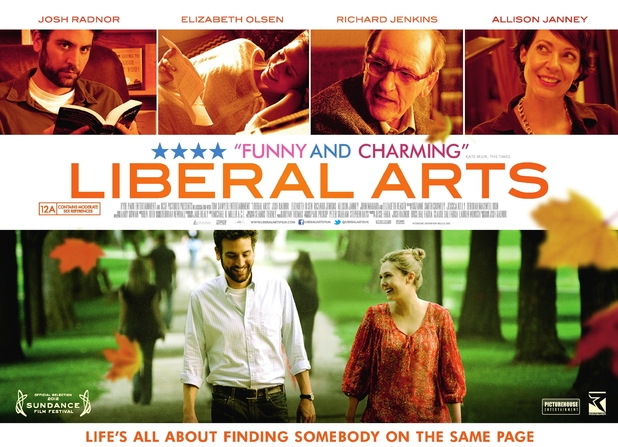
A film that I missed at the Film Festival last year with Josh Radnor's Liberal Arts.  As writer, director and star of Liberal Arts, the film really is his baby and all (well most of) the credit for a very charming film goes to him.


Of course, Radnor has a great cast behind him to back him up.  Radnor plays Jesse, a guy who has just broken up with his girlfriend and appears generally dissatisfied with life, who returns to the University where he had the time of his life to attend the farewell dinner of his second favourite Professor, played by the ever incredible Richard Jenkins.  While there, he encounters three students of note: an idealistic possibly drug addled hippie (played by Zac Efron, amazingly engaging), a tormented literary genius who reminds Jesse of himself (played by John Magaro, who I don't recall seeing before), and a beautiful young student with whom he falls head over heels in love, in the wide eyed doll-like form of Elizabeth Olsen.

From there, the film examines ageing, dating, falling in love, all through the rose tinted glasses of a stunningly beautiful college campus and an always sunny New York.  The incomparable Allison Janney strolls in every so often to deliver some dry sass and, as usual, steals every scene that she is in, but otherwise the film is Radnor's (and occasionally Jenkins') and his journey is a lovely, slow and completely understandable one.


There is not a huge amount more to write about this one.e  It didn't aim to be classic movie literature (well, I  didn't think it was), but it aimed to tell a decent story about a realistic group of people (no explosions nor armies of super-quirky or super-together friends in the background - besides Efron's Nat) and using everyday parts of life - music and books.


Everyone with me at the session was impressed with the movie and walked away with a smile on their face.  Of course, at the start, we were subjected to a person unwrapping about one hundred individually wrapped lollies, and having a dickens of a time doing so as well, which had almost everyone else in the cinema bemused/ready to kill him, but in the end, the overall niceness and lightness of the film ensured noone became homicidal and, in fact, everyone probably left in a happier mood than when they walked in.

Verdict: Liberal Arts is a great little film about growing old and finding meaning.  Sure, it ends on a very... twee kind of note, but that's okay - this is a rom com afterall.  Well done, Mr Radnor!  8 Mothers I Have Met out of 10.


Saturday, March 16, 2013

The Case for Ozzy


Oz the Great and Powerful is every inch the kiddie Disney film.


Perhaps that is not all that surprising really considering it is a prequel to the 1930s Wizard of Oz, and there are lots of nods to movies of that era, with the actors hamming it up a lot of the time and casting aside the subtlety and depth that has characterised many of their performances, and with the film starting in square monochrome and then, as the story shifts to Oz, turning into brilliant technicolour.

The film is visually extraordinary, though disappointingly the wonderful 3D features become, in 2D, a bit blurry and hazy and rather a disappointment.  But there are only a few scenes that have been obviously constructed to make the most of 3D technology.  

Its  pity then that the film starts off rather painfully and slowly then.  As much as i think James Franco, Zach Braff, Michelle Williams, Mila Kunis and Rachel Weiss are wonderful - indeed they are the reasons I chose to see the film - I could not get past the very slow and painfully obvious plot as Oz makes his slow and painfully obvious way to the Emerald City and has his encounter with the Wicked Witch.


Quite why he encounters the Wicked Witch in the Dark Forrest, where she doesn't really have a reason to be besides the fact it is an evil place to hang out, is never really explained, nor is how the populace of Oz seems to be ignorant of the nature of the struggle going on around them - until of course the whole nefarious plot has been revealed.

Yep, it irritated me a lot and I was, about midway through the film, convinced that I would hate it and also that the overreactor near me was going to explode if anything cuter than a doll or scarier than an explosion ever appeared (irritating!).  However - and yes, this surprised me too - the film kind of redeemed itself.

Once it got past the set up and the story settled in to the battle, it all got pretty exciting and interesting.  Mila Kunis stopped being sweet (though she is; did you see that interview with the young BBC reporter?):


As I was saying, she stopped being sweet and started screaming a lot as the action got more intense (though unfortunately she sounded a lot like Meg Griffin to me, which is awesome in itself).  Franco didn't stop being a confident, sleazy charmer (he does that so well), and Williams and Weiss get harder and fiercer and their showdown is pretty awesome too.


Overall then, I finished off with a positive experience of the movie.  I don't know if I could bring myself to watch it again, considering the beginning, but I can definitely recommend the end.  Wizard!

Verdict:  Oz the Great and Powerful is not a resounding success, but a bit like the Wizard himself, is a bit of a sham but can make a great show when it brings out the smoke and mirrors.  The cast itself is magnificent despite the tortured start of the film, and even with some cloying scenes designed to elicit your sympathy (those always annoy me), it still ends up being a pretty good film.  Kind of.  7 Rainbows over 10.

Saturday, March 2, 2013

The Case for a Pause


Hmmn, well the cinematic options at the moment are a bit weak (Movie 43Hansel and Gretel?) so I haven't really been inspired to go the local cineplex.

But then, there are things that remind me how wonderful movies can be.


Ah, that's... inspiring.

So hopefully I will be back at the movies in the next few weeks.

Verdict:  That movie is... something, isn't it?  Awesome.  5 whateveritises out of 5.


Wednesday, February 20, 2013

The Case for Hardly Dying


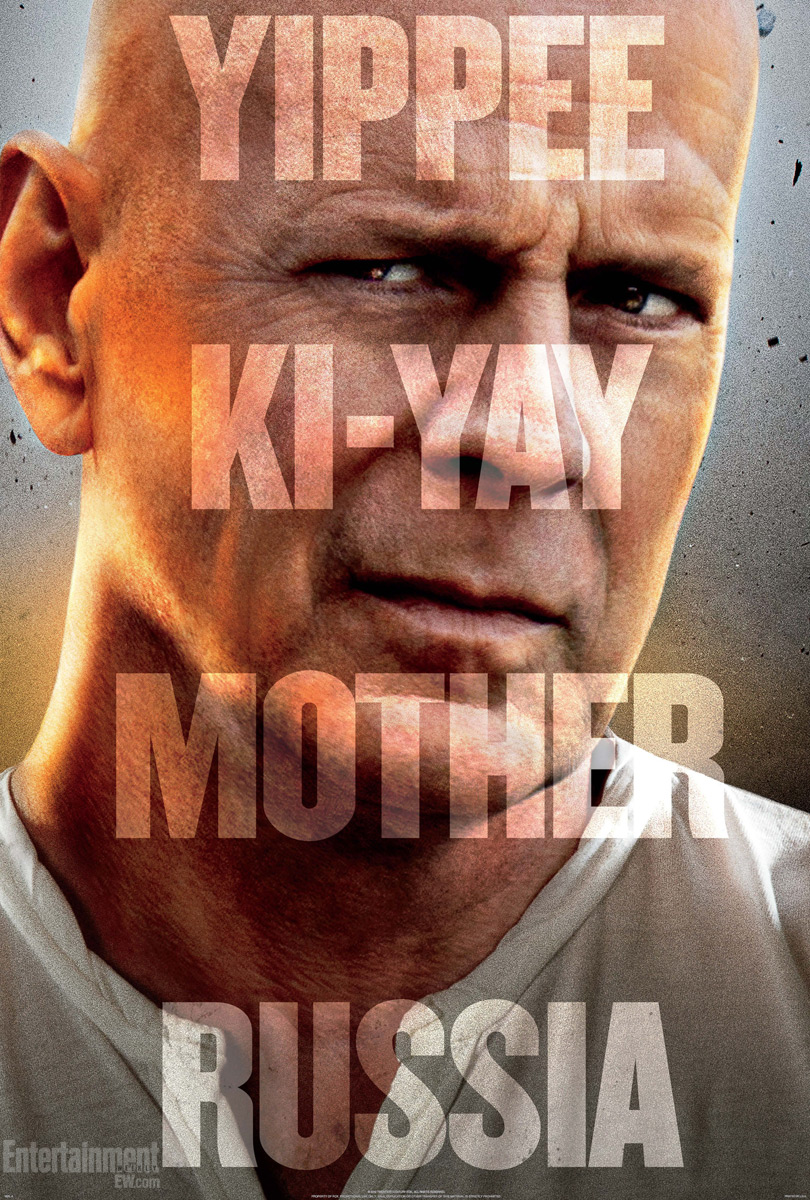
I am surprised how disappointed I was in A Good Day to Die Hard.


I had thought I had gone into the film with pretty modest expectations.  The last film was awesome (but then it did have Timothy Olyphant in it), but as he was not back for another round, I expected something more around the Expendables level of entertainment.

And so, after a very pedestrian “scene setting” opening, once through a “shaky vision” introduction pointlessly filmed at a shooting range, and around the time when a Russian Taxi Driver started singing “New York, New York” to an almost catatonic John McClane (Bruce Willis, back for more), I was a little shocked when I realised I had begun to clock watch.  Well, actually, that singing scene was incredibly painful, so I was squirming to avoid looking at the screen, so maybe I wasn’t really clock watching, more… in pain.


And the pain continued whenever any of the characters opened their mouths.  Jack, John’s son, played with a fully furrowed brow by Jai Courtney, is annoyed when his Dad drops by as his years-in-the-making CIA plan to free a political prisoner comes to the gun shooting.  Their exchanges in this unexpected situation establish that they have a strained relationship, that Jack is a moron with no training on how to evaluate a situation and act quickly, and that John is… well, I have no idea what he was expecting, either the situation or what he would do, but he is there and so will act as he should.

Much tearing around Moscow in indestructible Mercedes cars (other cars can destruct) ensues, John assaulting the local population and causing untold damage to property and injury and rubbing a few insults in there as well.  His son tends to avoid civilian casualties, so it seems the father has to do the damage.

Driving action leads to running action leading to assault action, the set pieces pausing occasionally for the actors to speak drivel to each other, Jack slowly melting to John’s… well, I would say charm, but he is not really equipped with any this time around, so maybe it’s just the fact John appears to know how to run a CIA operation better than a trained operative.  The baddies shift and change and occasionally dance, but their motivations are meaningless and the choice of “hiding place” nonsensical, as is the technological marvel that, when sprayed around a room like can of fly spray, can neutralise radioactivity in a 10 kilometre radius.  


The actors themselves could be fine.  They all cut the bill: the people playing the villains are bad and regularly stupid, the heroes are rugged and brave and can take metal spikes in the abdomen, and the two women with speaking roles (with about 10 lines between them) are gorgeous and with great hair.  Possibly, if any of them had been given good material, they could have been involved in a decent film.

But the reality is, the story is rubbish, the dialogue painful and the direction close to incompetent.  I turned to one of my companions as the final scenes began, when our heroes (avoiding prosecution for the wilful injury of dozens of people and destruction of millions of dollars of property, obviously) return to American soil and said. “When will the hurting stop?” and she groaned back, “I know…”.  None of us thought the film really had any merit, and I actually thought it had little entertainment value.  Some films like Battleship can at least be entertaining as it insults my intelligence – A Good Day to Die Hard didn’t even bother with that.

Verdict:  As you may have guessed, I thought A Good Day to Die Hard was terrible.  A really good franchise gets an injection of the next generation of McClane, and while I would like to see the new guy get a shot at carrying on the tradition, I am kind of hoping this film kills the series.  It definitely deserves to be put down.  Today is a good day to die, indeed, preferably without watching A Good Day to Die Hard.  1 yippe kai-yays out of 5.


Saturday, February 16, 2013

The Case for Impersonations


I'm running a little behind with my reviews at the moment, with two biopics on my viewing schedule this week.

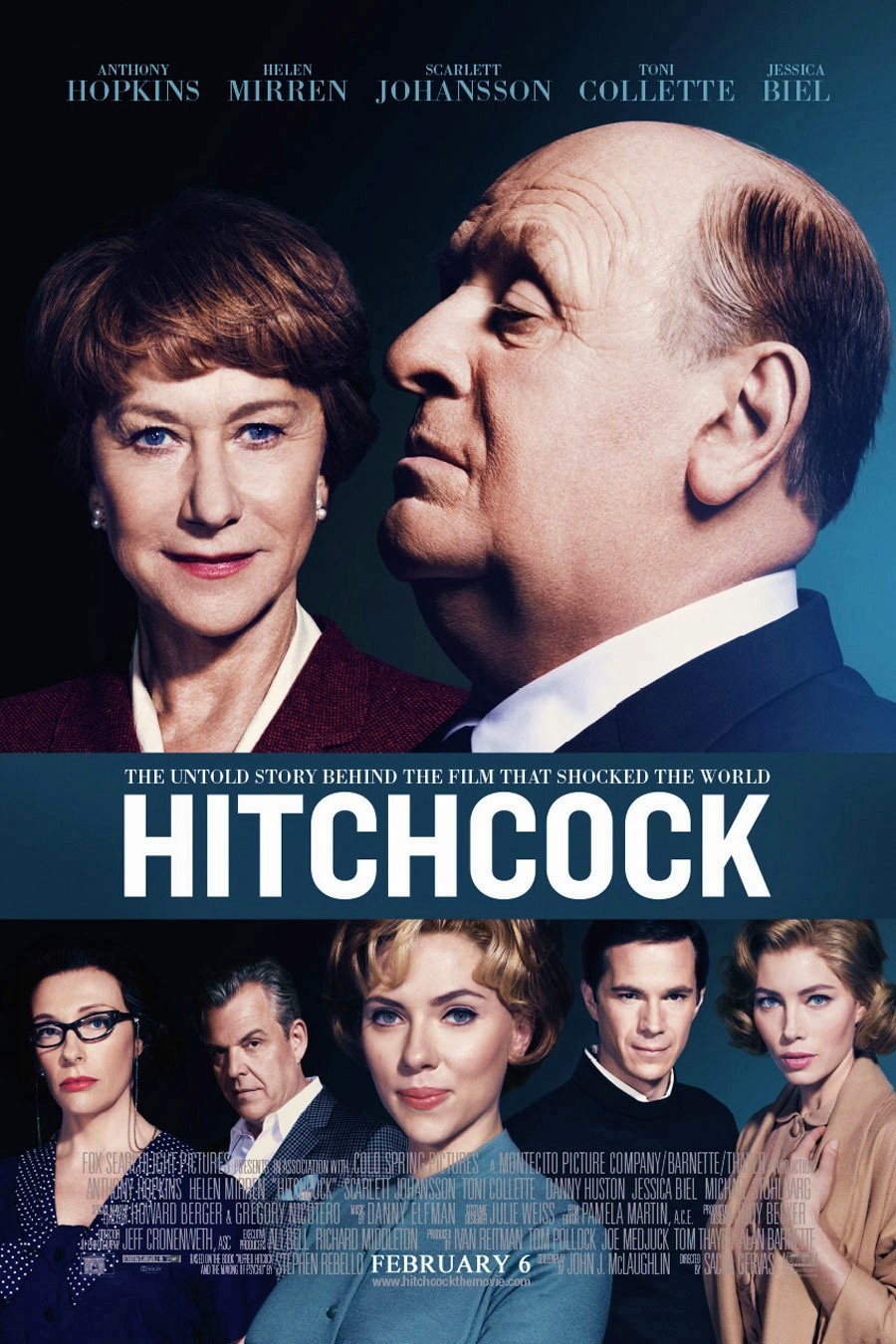
First off was the Anthony Hopkins starring Hitchcock, with the Lecter-er in a fat suit and with adopting a very deliberate way of talking.  Alfred Hitchcock is sixty and the studios seem think he is a little past his best.  What is a man to do but bring the story of a disturbed man to life and make a movie masterpiece in the form of Psycho?


Easier said than done of course - the studio isn't convinced, the censors are outraged by the idea of seeing a toilet on screen (and a toilet flushing to boot!) and Hitchcock is on a diet as well, or at least supposed to be. The man's wandering eye also causes a bit of trouble considering the incredibly talented woman he is already married to, Alma Reville, in form of the ever amazing Helen Mirren. 


Hopkins does a great turn as the Master of Suspense, ably supported by Mirren and a raft of magnificent supporting actors (Scarlett Johansson as the unflappable, sensible, stunning Janet Leigh?  Of course!  And the guy they found to play Anthony Perkins, James D'Arcy, does spooky scarily well) and the story chugs along with quite a few laughs, more knowing references and the odd bout of melodrama.  It's all highly watchable really, though two people behind me felt the need to discuss all the references ("Oh, he talking about Psycho!") which had me reaching for a knife and and expecting to turn and plunge it through the shower curtain.


The film is not that long, and there is no real need to be.  It isn't an exhaustive film showing the making of a cinematic classic, but focuses more on ageing and youth in Hollywood.  There are some scenes that attempt to show the "inner turmoil" of the master as he grapples with his self doubts which aren't entirely successful, but these are brief and occasionally softened with a bit of humour. And, overall, the film is highly entertaining, even if at the same time, it never really feels like an outstanding, award-winning film.  

Verdict 1: Hitchcock is a great biopic about the legendary man and his not so well known but unbelievably deserving wife.  Packed with great actors in fabulous roles, and working towards what everyone knows will be a classic, its a great telling of a little story with a dash of murder most horrid thrown in as well.  8 out of 10 birds.

The second biopic of the week is in the form of the Oscar front runner Lincoln.  Making a serious film about the US President that brought about civil war in his fight for an end to slavery was probably always going to get an Oscar nomination or tend, even without Steven Speilberg behind the helm and the amazing Daniel Day Lewis in the lead role.  With them, well, they might just win those awards.


By all accounts, Lewis' portrayal of Lincoln is very true to life, and one has to imagine that Sally Field, as his wife Mary, is doing a great job as a shrill, semi hysterical, but devastatingly intelligent first wife.

Unsurprisingly with a film that as Oscar contender written all over it, there is no lack of thesping talent forcing itself into every nook, cranny, scene and role: Tommy-Lee Jones, James Spader, Joseph Gordon-Levitt and a whole lot of other familiar faces and names all squeezed into period costumes, big hair and mud.

The film focuses on the political battle in Washington, D.C. to pass the 13th Amendment to the American Constitution more than the battlefields further to the south.  Some of the twisted and tortured logic by which Lincoln freed the slaves of the northern states to help fight the war with the southern ones were far too complicated for my mind to follow, but the gist was that the bill had to pass before the war was won, as peace with the southern states, who had declared independence and therefore were not voting as part of the Union, would not give enough motivation for the representatives from the remaining States to do the right thing.  The twists and turns needed to get people to do the right thing, either through logic, emotional blackmail or plain bribery, is an interesting insight into the psyche of the time, with even characters in the film musing on the nature of a democracy and a freedom won by slight of hand and dirty dealings.

Nonetheless, the film is a lot of fun to watch - which it has to be given its pretty impressive length.  Lincoln is shown as a teller of tales and a fairly smart, likable man determined to get this one thing done.  

Surprisingly, there aren't that many black characters involved in any of this.  The lives of slaves are not shown; the black characters in the north are all free (though in subservient roles, of course); and a black soldier having a pretty free and frank discussion with the President is about as deep as it goes into the whole lingering prejudice that a change in the law can't easily turn.  

But that's a minor quibble.  This is a very flag wave-y American story, and incredibly well told.  Well, as long as the people sitting behind you aren't trying to tell their own version of history or comment along with the story as the film progresses (I had a bad week obviously).  Definitely worth a look - and I will be curious to see how many awards this one walks away with.

Verdict: Lincoln is rock solid Oscar material: historical tragedy and triumph made by a master of film and starring an incredible chameleon and a supporting cast that most films would die for and who, possibly, for the chance to work on this film, would have done so for free.  11 out of 13 amendments.


Thursday, February 7, 2013

The Case for Plays of the Week


If you have to see one conspiracy movie this year, make sure it is The Silver Linings Playbook.

Just joking.   Kind of.  Because the Silver Linings Playbook is more a bit of a black rom com, though there are machinations and manipulations galore that aim to get Bradley Cooper’s character, the wayward Patrick, back on track.

Patrick fell off the rails a while ago when he found his wife cheating on him, almost beating her lover to death.  The film picks up around the time of his release from hospital and his reintegration into society, assisted by his parents, his friends who never came to visit him while he was incarcerated, and in the nubile young form of Jennifer Lawrence, playing a similarly damaged young woman, Tiffany, who chose to act out the death of her husband by sleeping around with almost everyone she could find.


And that is the story.  But there is more to it, of course, as this is an Oscar nominated film.  And while it is not a big story, it is filled with nice little touches that overall make for a very watchable and interesting film.

First off are the leads.  Bradley Cooper is the “made over” version of Patrick, from ugly duckling to a swan once considered the world’s sexiest man (of course).  He does mildly crazy pretty well, considering all his practice in those horrid Hangover movies.  He is supported (in many ways) by the incredible Jennifer Lawrence, dazzlingly defiant much as she was in the Hunger Games, not to mention stunningly beautiful. 

It is great casting to have her elder sister played by Julia Styles, herself the poster-woman for youthful rebellion and feminine independence over a decade ago – and you could see the role of Tiffany going to her if the film had come along ten years earlier.  Also in the wings is the softening Robert deNiro, once a tough guy so tough that only Chuck Norris was tougher, but here playing Patrick’s highly superstitious Dad, and he manages to have an edge despite the shuffling of his slippered feet around the set.


And it all plays out wonderfully.  Philadelphia looks cold and almost deserted, considering how few cars (and how many runners) are on the streets, and the inhabitants seem sports mad – incredibly so, as one scene outside a sports arena shows.  Both Patrick’s and Tiffany’s problems are dealt with according to the personalities of the characters involved, which adds an authentic and occasionally uncomfortable air to how things play out.  Considering the naturalness of the start of the film, the final few scenes are unbelievably contrived (the showdown, the show), but considering all the good will the film elicits, I didn’t really care that much.


Yes, as I was warned, it is kind of a chick flick – there is a bit of romance in there.  But overall, the film is sweet, warm-hearted and occasionally funny, and overall, really good.

Verdict:  The Silver Linings Playbook comes up gold.  Sure, it is not a terribly deep or innovative film, and there are several scenes stolen from other flicks, but the overall effect of the acting, the script and the direction is a warm, fuzzy and ultimately satisfied feeling.  I doubt that it would take out the top Oscar gong, but the Silver Linings Playbook is definitely worth a look.  8 Lionel Richie songs out of 10.