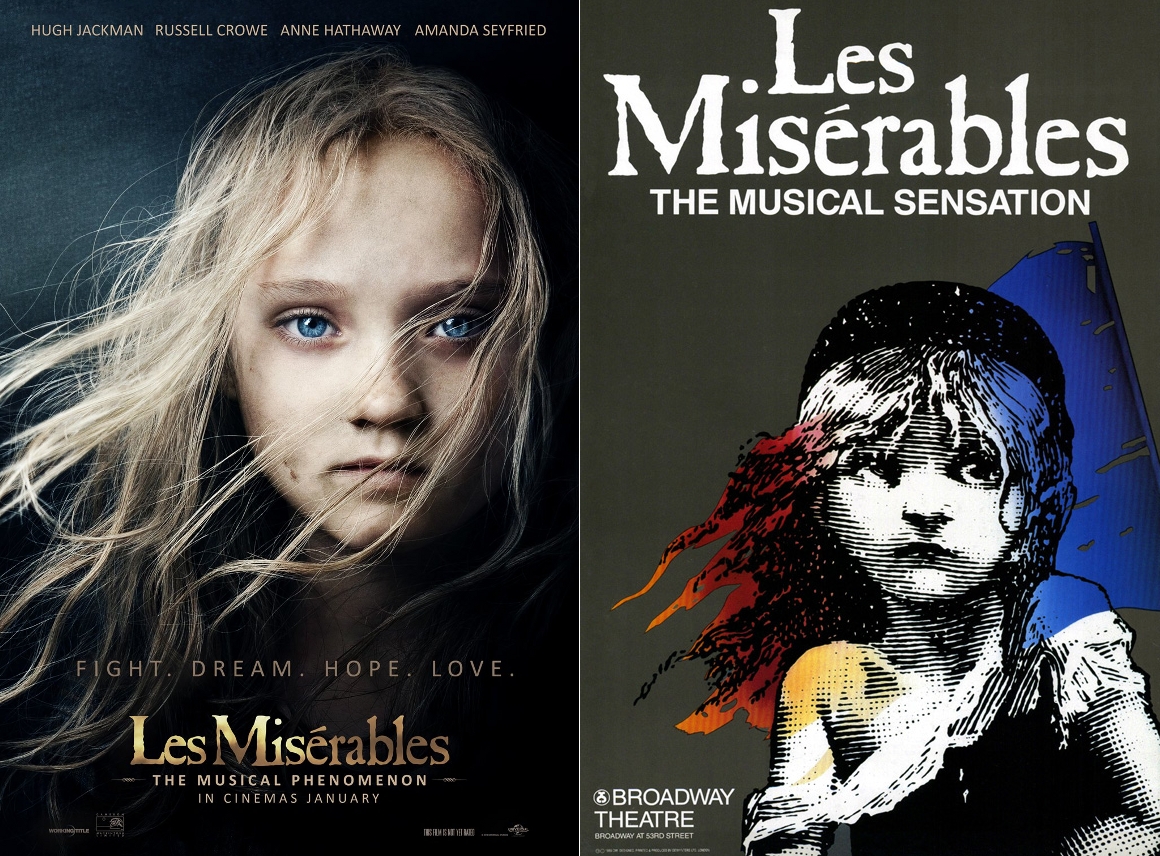
The musical of Les Miserables as a movie? Well, a lot of other musicals have made that transition, and some of them weren't too horrendous, but it seems a lot of people have wanted to go (the screening at the new Lighthouse on Cuba Street had to be moved into a bigger room to fit in all those wanting to attend) and see how this one came out. And a lot of them have told me to beware of Hugh Jackman.
After seeing the film, I wasn't entirely sure why he came in for so much criticism. I mean, I could see why - his role as Jean Valjean is pretty thankless musically, as he has to sing a lot of the "bridging dialogue" to pretty uninspiring tunes and doesn't really get a big stand out song of his own. And, sure, his voice is of the wobbling variety, and is sometimes lost in his desire to emote, but otherwise, he's pretty good - if, after all that, there is anything left to praise.
As to the story, well, Valjean is a convicted criminal who flees parole and makes a new life for himself. He is pursued by Javert (Russell Crowe, singing strongly but, for me, rather nasally) and eventually having to flee, taking Cosette, the daughter of the tragic Fantine (an amazing Anne Hathaway - wasn't she in Princess Diaries once upon a time?) who gets the show stopping "I dreamed a dream" song, during which the audience sat motionless, completely and utterly silent and mesmerised.
The story then shifts to Paris where a now grown up Cosette (sung like a chipmunk by Amanda Seyfried; thank goodness Cosette doesn't get too many songs as an adult) falls for the revolutionary Marius (a really impressive Eddie Redmayne), who is actually a bit of a prick considering how quickly he forgets the ideals of the revolution once all his friends are dead... but that's not important right now.
It's all pretty depressing stuff, but packed with some incredible songs along the way, even if I wasn't overly impressed by Samantha Barks' version of my favourite song, Eponine's "On My Own".
Of course, Barks probably was a bit distracted by the fact that whenever she sings in the movie, the director decided to drown her in fake rain. Maybe that is also to show off her amazing body, with her incredibly small waist and plunging cleavage.
So the story and songs are incredible, and the performances are pretty good, especially considering they were all sung "live", as it were. It's a pity then that the cinematography was so disappointing, though I did wonder if some of the extreme and disturbing close ups during the songs were so that the boom or the microphone or whatever wasn't in shot as the actors belted out the words.
And the film is really, really long. This is not helped by the very slow ending and a couple of uninspiring songs also bringing up the rear. Helena Bonham Carter and Sasha Baron Cohen (love those names) pop up regularly to provide some light relief from the otherwise unrelenting misery (in which I also include Seyfriend's singing), and they do make some of the slower scenes pass more swiftly, but that didn't stop me from fidgeting more and more as the end slowly came into sight.
Verdict: Les Miserables is an amazing stage show and the movie puts it on screen in a very competent way. I was not overly impressed with the staging and some of the performances, but given the material, it was always going to be pretty good. It is just not much more than that. 6.5 red flags out of 10.
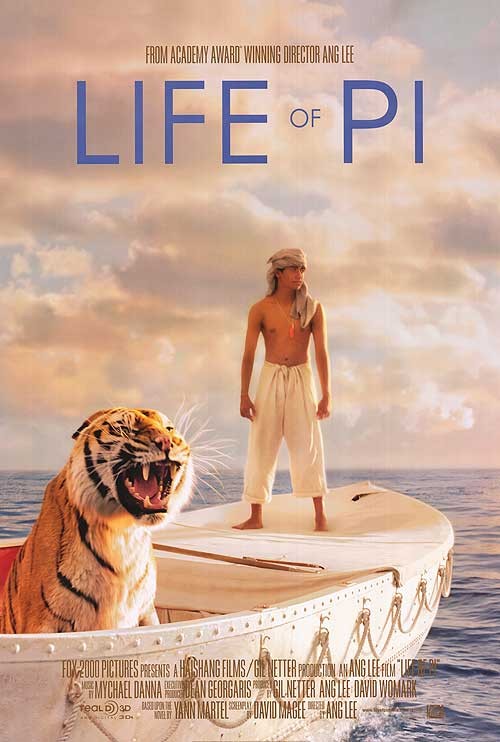
I have one regret about seeing Life of Pi. I did not see it in 3D.

Actually, there are a few other regrets, to do with the theatre at Readings with the terrible sound (cracking 20 seconds or so), the person next to me who kept texting throughout the session, the person who brought individually wrapped crisps and ceaselessly unwrapped them and then the evil people who sat in the wrong chairs… actually, that last one was me (by accident; I always mistake row K). Actually, I was a little unimpressed by all those in the middle of the back rows who came in at the very last second as the trailers finished to tut admonishingly (I couldn’t see their faces to see them rolling their eyes, though I felt it) when they found people in their seats (like me, by accident, honest).
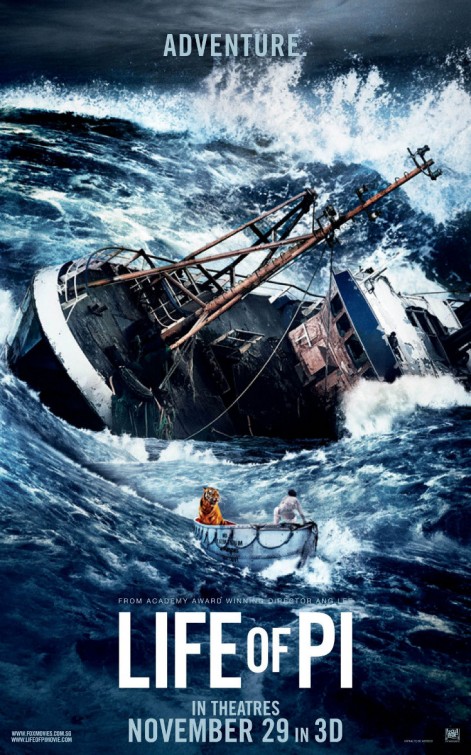
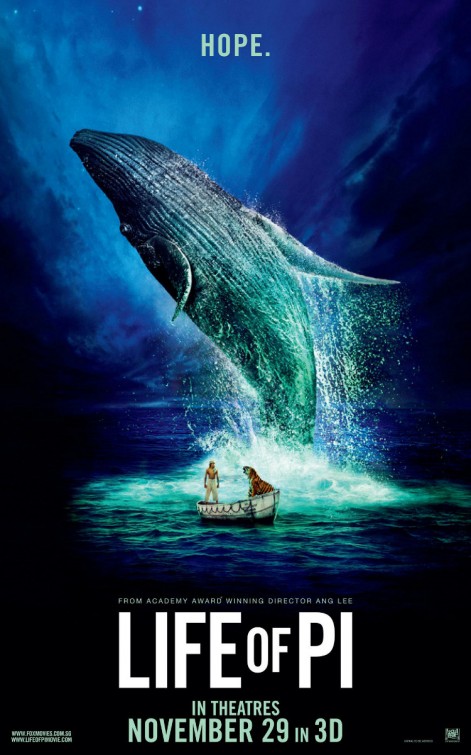
But the only regret I have about seeing the movie itself in the 2D version as, if the visuals throughout the film were any indication, it would have been breath-taking to behold. As it was, in standard two dimensions, the visual were truly remarkable, the CGI animals rendered beautifully (only occasionally looking a bit animated) and the wide Pacific Ocean resplendent in the early morning hues or in the tempestuous cyclones of the different days of Pi’s journey on a lifeboat.

And that is, kind of, what the story is about. Pi, a young man with a passion for religions, finds himself the sole survivor of a ship sinking – well, sole besides a few of the zoo animals that were travelling with him and his family, and some of the more unsavoury animals at that.
This story is wrapped around the meeting of an older Pi with an uninspired Canadian novelist looking for his next best seller, lured to Pi by the prospect of a story that will leave him believing in god. Or God.
There is no Coldplay.

Whether that is a sign of a deity or not, I was not sure. However, I was unconvinced by this “promise” when the final credits rolled. It kind of felt like a tacked on attempt at epiphany when all that really existed before was a very good story.
And it is good. Ang Lee makes a sumptuous feast of a film, with beautiful images and characters (and animals) abounding. There is animal violence (which elicited quite a few yelps from the person next to me) and Gerard Depardieu (not speaking Russian), and the whole “younger Pi” part of the film is superb. The “older Pi” slice is a little less successful, though the two actors putting the rest of the film in context do a good fist of it.
I have heard people say that they found the film depressing rather than inspirational, and I can definitely see that perspective. However, it struck me more as a bittersweet film, and a very well done one at that.
Verdict: Life of Pi was definitely not the life affirming movie the preview promised, but it was an entertaining and beautiful film nonetheless. If I was ever stuck on a lifeboat myself, I doubt I would want the Life of Pi film on my solar powered tablet to keep me entertained, but if I had 3D goggle version… that might be a different story. 7 para para paradises out of 10.
Now that Pixar is officially bought by Disney, I am not sure if Wreck It Ralph qualifies as one of their works. I will say no, as overall, I was a little underwhelmed by this offering, but more on that later.

The usual “short” before the main feature provides additional evidence against this being a Pixar film. First and foremost, the Paper Man is animated in the traditional, manual way and the main characters are portrayed in a very Disney style. It starts off quite well and possibly edgy in a family friendly black and white way, but in the end deteriorates into a lazy, trite romance, albeit with great animation.
And then the feature starts (after several “this is Disney” logos). Considering the film is drawing on video game greats through the ages (like Q-Bert, Pac Man, Street Fighter and the like), I would have thought there would be a hundred opportunities to make big jokes and subtle digs using the characters known to arcade fans of all ages. And a few jokes there are, in the beginning, though they dry up when the main story kicks in and Ralph tries to be a hero.

Ralph (voiced by Thomas C Reilly), you see, is a villain in Fit-It Felix (who looks and sounds like Kenneth from 30 Rock, probably because it voiced by the same actor) and feels underappreciated. He wants feel like the hero for once, and so goes in search of an elusive hero medal, and then, in trying to keep it, learns what it takes to be a “real” hero.
His first foray takes him into a first person shoot ‘em up under the command of a ballsy military commander Sergeant Calhoun voiced by Jane Lynch, whose penchant dry snide remarks instantly make her the most awesome character in the movie. It’s a shame then when she is left behind in the back up story when Ralph moves to car racing game Sugar Rush and joins forces Penelope, voiced by the talented Sarah Silverman who can make any character incredibly annoying within two seconds. Penelope wants to get back in the regular game racing roster, but the King (voiced by an unrecognisable Alan Tudyk) has other ideas.
Once the action shifts to the Sugar Rush, the movie lost a lot of the magic for me. I found Penelope ridiculously annoying and cloying and so was not really impressed when she took centre stage. Her final speech I found particularly irritating (SPOILER ALERT) where she denounces royalty in favour of Sugar Rush becoming a “democracy” shows that she doesn’t quite get that you can call yourself President if you like, but if no one votes for you as a leader, that is still like a monarchy (though is more likely called a dictatorship).

There is a lot more that goes on in the story that I will not touch on here. But the animation and music are amazing, evoking the magic of the original video games (though I was not altogether sure why Ralph and Felix move a lot more “smoothly” than the rest of the characters from the game) and the violence and/or cutesy levels that games of now have achieved. I am not sure if it convinced me to go back to the arcade, but it kind of made me want to play Street Fighter again – mainly to go all Ryo on the people in the row behind me who had the loudest and hardest to open chippie packet known and seem to pop a bottle of champagne at one stage as well.
Verdict: If I view Wreck It Ralph as a Pixar film, I am disappointed, so I will instead see it as a Disney film and that means I see it from a completely different perspective. Jane Lynch steals the movie, even though there is not much of her, and it’s a shame when things get stuck on “saccharine” in Sugar Rush. But overall, there are some lovely classic game references (more at the beginning) and a few one liners to make one smile. It’s just a shame there are large tracts of unremarkable storytelling in between. 6.5 Zurgs out of 10.
Sometimes, I think it is just me, but then something like this comes along:
(Not sure if the embedding is giving me the one I want (Sports fans and Nationalism), but if not, click here)
Big thanks to KiwiinZurich for pointing me in the Angry Canadian's way.
Verdict: I agree with almost everything in this video. Am I actually very twisted and bitter inside? Probably... 10 Maple Leafs/Leaves out of 10.
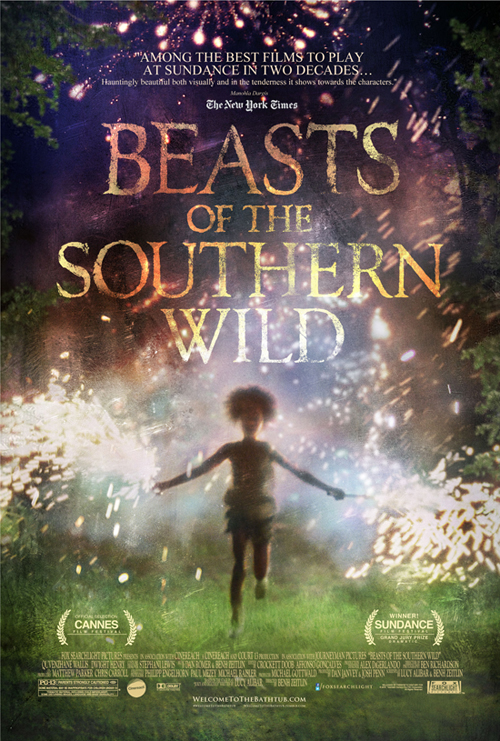
There are some movies that I go to because the reviews have been rave, even if the trailer I have seen does not really fire my enthusiasm. Recently, that has worked out pretty well for me. Until I struck Beasts of the Southern Wild, and that run of luck ran out.
Beasts of the Southern Wild follows the story of a young girl called Heffalump (its not actually; her name is Hushpuppy) who lives with her father in a place called Bathtub near New Orleans. It’s a place inhabited by materially poor but spiritually free people, some of whom also happen to be mildly bonkers, and it is also a place prone to flooding – and Hurricane Katrina is on its way. The impact of the storm on the lives of Bathtub’s inhabitants is profound, some refusing to leave their homes despite the severe flooding that hits. As things get worse, Hushpuppy and those who stayed behind have to deal with the flooding’s legacy, and with trying to avoid assistance from the wider community, a community they don’t want to join.
The film is mostly shot in shaky vision, and I wonder if this is what drove some people from the cinema 10 minutes into the screening I saw, never to return. It is really irritating, though for the most part I was able to look past the wobbliness and appreciate the beauty of the Southern Wilds.

While there can be no doubting that Quvenzhané Wallis's performance as Hushpuppy is amazing, I personally found her neglectful and nigh on abusive father completely unsympathetic, and Hushpuppy’s “profound” utterances seem aimed more at the cinematic crowd than to actually reflect thoughts she would be entertaining. Hushpuppy’s father seems so hell bent on keeping his independence that he seems to almost ignore the fact he has a young daughter in his care, leaving her to fend for herself a lot of the time and ignoring the impact that his own health and well being would have on her.
Likewise, the Bathtub community is full of quirky characters who are fiercely independent yet supportive of each other – except in the case where they completely ignore Hushpuppy’s poor treatment at the hands of her father.
These “cruelties” proved to hard a hurdle for me to leap over, and it ruined how I experienced the rest of the film. My companions had no such trouble, or else did not see the issues that I saw, and so they had a great time and enjoyed the film immensely.
And so, I will leave my review there. Despite the film’s beauty and the freedom and strange other worldly existence it seems to love, I found that showing it all through the eyes of a young girl, born to the lifestyle but not choosing it and surrounded by people too wrapped up in themselves to care about what it meant to her, to be disturbing and unsettling.
Verdict: I may have gone into Beasts of the Southern Wild in the wrong frame of mind, as I couldn’t bring myself to appreciate the joys that Hushpuppy experienced when all I could see was the hardship. 4 beasts out of 10.
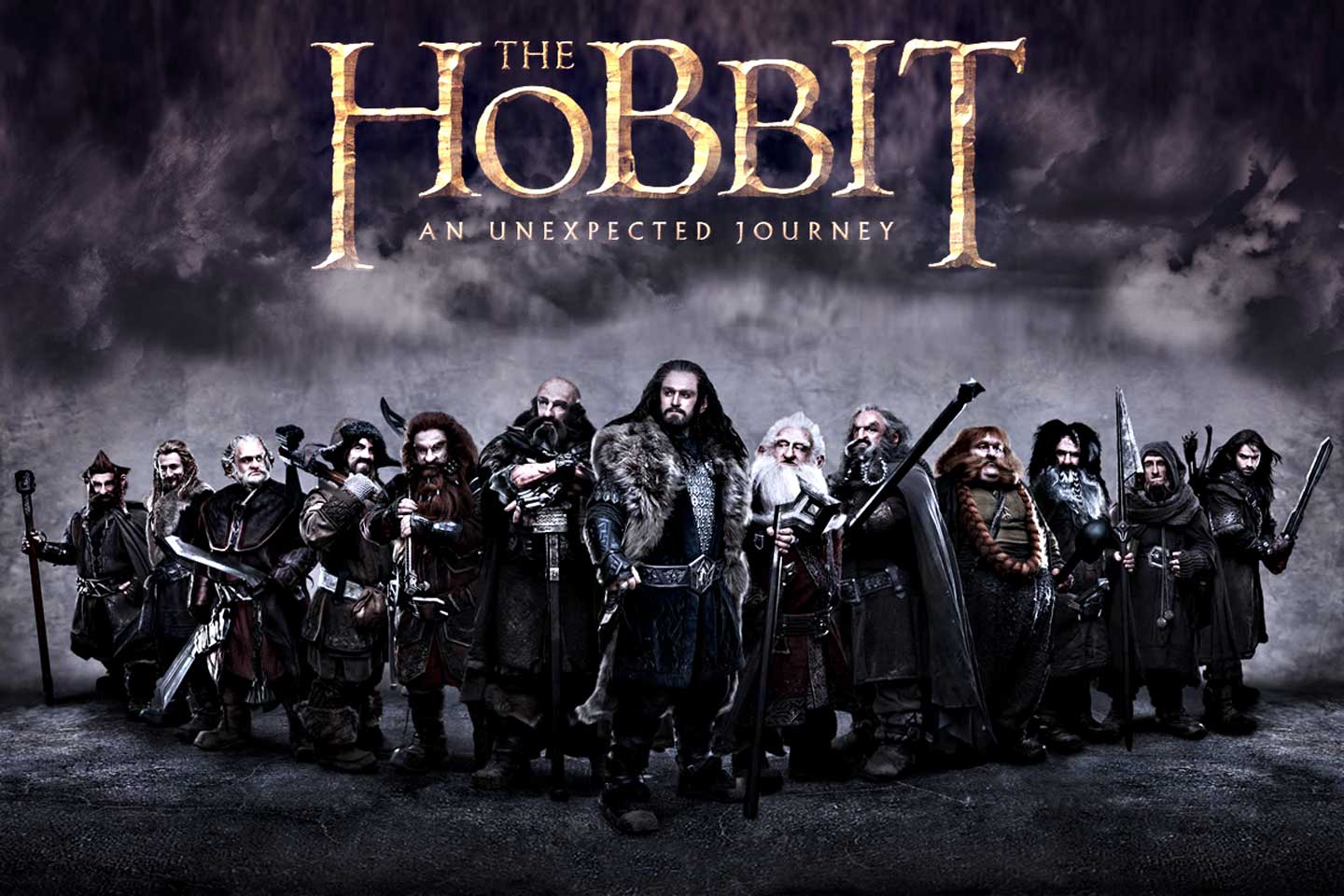
It was quite a treat seeing the first Hobbit film, The Hobbit: An Unexpected Journey, with its rapid frame technology and 3D whiz bangery, at the Embassy cinema, because, of course, the Embassy is the best place to see any spectacular movie, the place being packed out adding to the atmosphere rather than detracting from it.
At any rate, happy in my non-platinum seat, I settled in to watch the nigh on three hour long film. I was a little nervous from the outset, loving as I do the Lord of the Rings trilogy and a bit uncertain how a much smaller book would be stretched out to fill three movies of about the same duration.

The answer to that was that things would take their time. The film starts off with a long, slow nod to the Lord of the Rings, with welcome cameos by Ian Holm and Elijah Wood reprising their roles, before shifting to the time of the Hobbit, and opening the current tale.
Again, the opening takes a while, with light comedy and an appalling “dishes” scene (I am not sure if it was the CGI being bad, the picture being too good, or me being too cynical, but I really thought it was terribly done) as the Hobbit (Martin Freeman) meets up with the dwarven companions with whom he undertakes his unexpected adventure. It’s a big group, with characterisation reduced to very straightforward stereotypes (the fat one, the stupid one, the hero, the good looking one, the young one etc; none of them terribly engaging), but I was surprised how little I felt Bilbo Baggins’ character was also explored. Perhaps I was just spoiled by the awesome characterisations in The Lord of the Rings.
But once the troupe leave the Hobbit hole and start exploring the world, things pick up – mainly in the action stakes. Orcs, Trolls, Barry Humphries, and more encounters with characters from the Lord of the Rings (Bret McKenzie gets to speak as not-Figwit; Hugo Weaving is all frowny face as the condescending Elrond; Cate Blanchett is as eerily luminous as ever as Galadriel; and it was wonderful to see Christopher Lee being all respectable in a “not that evil yet” kind of way as Saruman the White).

Of course, the person everyone wants to see is Gollum, and when he and his precious show up, I could feel the whole audience smile and enjoy Andy Serkis’ performance. As well as being beautifully rendered digitally, Serkis manages to add a depth and character that none of the live performances are able, or perhaps encouraged, to do. It’s a shame really, as while the turn is scene stealingly awesome, it really highlights the dullness of the other characters.
The special effects are as incredible as one expects from WETA, though some of the scenes themselves tend to drag a little. The video game arcade race through the halls of the goblin kingdom are great in a platform game, but a little dull when you are not actually directing the action with the help of your joystick. Likewise, the battle of the mountain giants is visually impressive, but the involvement of the troupe seems a little silly and probably the whole scene could have been excised without too much trouble.
However, the only character that really outstays its welcome is the Albino Orc (or should it be White Orc?) who is determined to kill our heroes, asking everyone to save the leaders for himself, but then deciding at the last minute that someone else should strike the final blow. Fuelled by a rage that has obviously stood the test of time, he and his minions show up to be threatening every so often (though they never really achieve anything), which is probably faithful to the book, but not exactly menacing nor all that interesting.
I did wonder about younger Bilbo’s eyes though, as Freeman seemed to have brown eyes whilst the older him had blue – I was not sure if this was a One Ring effect or what, but I noted early on how big and blue Frodo’s eyes are, and that older Bilbo had the same eyes, and Gollums eyes are scarily blue, and then younger Bilbo… ah.

Anyway, the most important question is: was the film entertaining? And unreservedly, I have to say yes. It was not always fast paced, and the main company really relies on Gandalf to provide a character of real interest, but its all wonderfully put together and, with the 3D high frame rate technology, it looks spectacular, if occasionally a little fake.
Verdict: The Hobbit: An Unexpected Journey returns to Middle Earth and serves up another dose of awesome fun. While it might not live up to the fantasticness of the Lord of the Rings trilogy, and it will be interesting to see how the material is stretched to cover three films, I will definitely be joining the journey myself. 10.5 members out of a party of 14.
It had to be better than the last one.
And Skyfall proved to be a whole heap better than Quantum of Solace, though it still was not quite as excellent as Daniel Craig’s first outing as James Bond in Casino Royale.

Watching a James Bond movie at the Embassy just feels so right somehow. The large theatre with the ornate decorations and plush seats (platinum, definitely; normal, still pretty awesome) is designed to make watching a movie an event, and a James Bond movie always fits that bill. Loud, with big explosions and action set pieces and (since the 1990s) a pretty nondescript theme song, Skyfall ticks all the right boxes, with director Sam Mendes playing it large with nods to Bond films past and (quasi-chronologically speaking) future.
Of course, the film hinges on some big performances, and Daniel Craig has reclaims his mantle as the “dark, troubled” Bond for the 21st Century (whereas Timothy Dalton was the darkish, dangerous bond of the 80s). Craig’s Bond seems in an almost permanent state of irritation, and considering his muscular, battered condition, he definitely does not appear a man that you would want to annoy.

Unless you are Javier Bardem of course, who once again manages to make a fairly bad haircut a sign of incredible menace. His Mr Silver is this movie’s arch villain, a man bent on revenge, and bent in several other ways as well. He has a grand, mysterious plan, one that I will not reveal here, but which requires an incredible (and I mean that in the “suspension of disbelief” as well as the “impressive” sense of the term) forethought and clairvoyance to achieve. Quite why this computer wizard who can hack into the MI6 computers on a whim would need to steal a laptop’s hard drive to gain MI6 secrets (why was the computer in Turkey again?) is never fully explained, but then there are a lot of things that crop up that the audience is expected to accept as part of the normal Bondish fantasy.
At any rate, much like his villain turn in No Country For Old Men, Bardem steals the show as soon as he arrives on set. Bond may brood, but Bardem is bonkers and it’s a credit to Craig that he manages to keep his character visible with Mr Silver stealing all the spotlight. Even the great Judi Dench, returning as stern headmistress M, has a hard time keeping centre stage.

It was about the time Silver slipped back into obscurity that my enjoyment of the film began to wane. It’s not to say that it is bad, not at all; but the pace just seems to slow somewhat, the bangs and explosions seeming to lack a little bit of thrill. But bangs and explosions there are, and who can complain about that in a Bond film?
There is also a sense that Craig will not play Bond much longer. As fit and intense as he seems, there film hints that he is getting a bit "past" it. He will no doubt be back for the next Bond, but how long will it be until we see a new one? But, more interestingly, how will the next Bond "reinvigorate" the franchise?
Verdict: Skyfall is everything you would expect in a Bond film, including its length (at about 2.5 hours). Big explosions, girls, bad one liners, more explosions - and this one has Javier Bardem upping the awesome evilness factor. Not the best, but definitely a goodie. 7 martinis out of 10.