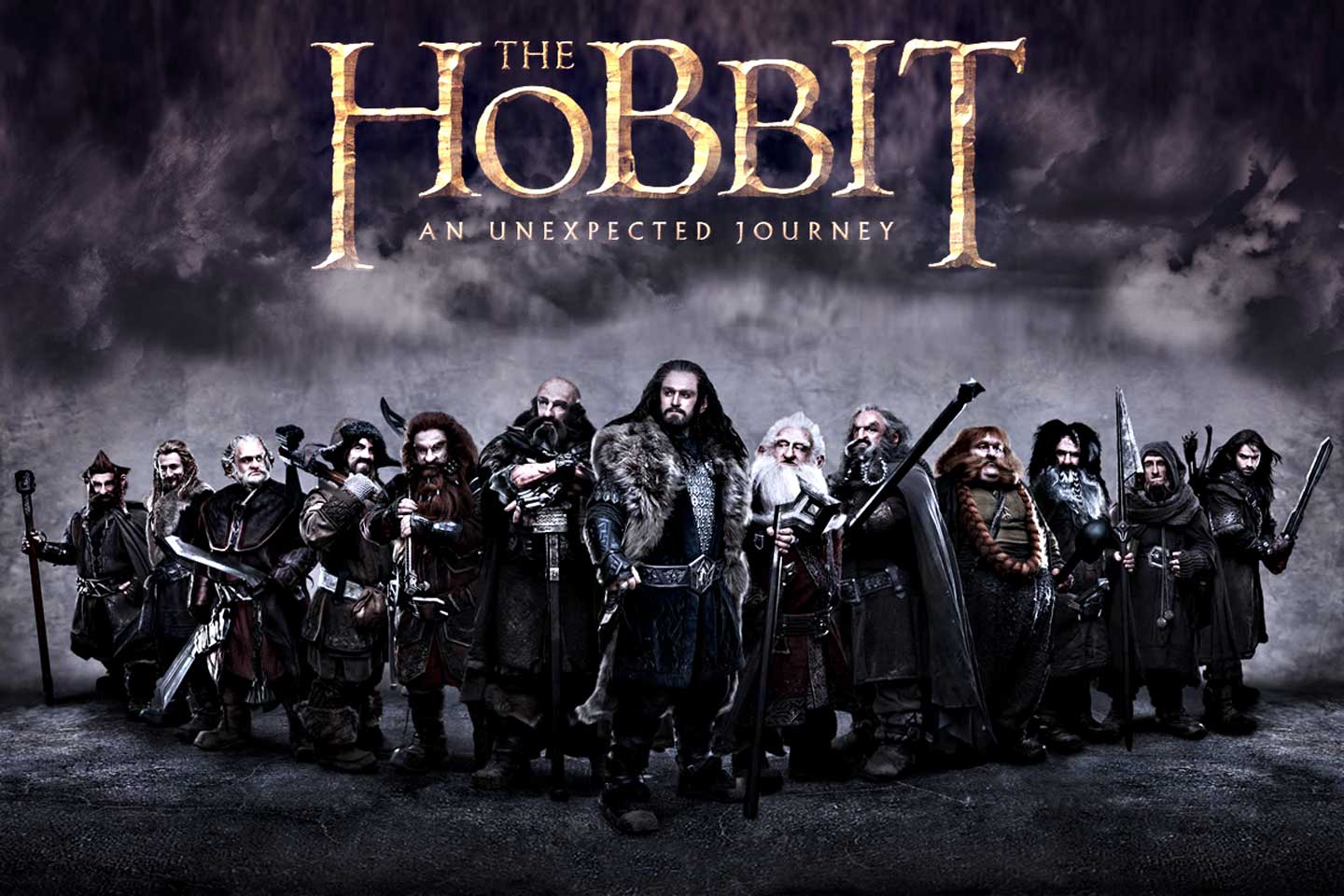
It was quite a treat seeing the first Hobbit film, The Hobbit: An Unexpected Journey, with its rapid frame technology and 3D whiz bangery, at the Embassy cinema, because, of course, the Embassy is the best place to see any spectacular movie, the place being packed out adding to the atmosphere rather than detracting from it.
At any rate, happy in my non-platinum seat, I settled in to watch the nigh on three hour long film. I was a little nervous from the outset, loving as I do the Lord of the Rings trilogy and a bit uncertain how a much smaller book would be stretched out to fill three movies of about the same duration.
The answer to that was that things would take their time. The film starts off with a long, slow nod to the Lord of the Rings, with welcome cameos by Ian Holm and Elijah Wood reprising their roles, before shifting to the time of the Hobbit, and opening the current tale.
Again, the opening takes a while, with light comedy and an appalling “dishes” scene (I am not sure if it was the CGI being bad, the picture being too good, or me being too cynical, but I really thought it was terribly done) as the Hobbit (Martin Freeman) meets up with the dwarven companions with whom he undertakes his unexpected adventure. It’s a big group, with characterisation reduced to very straightforward stereotypes (the fat one, the stupid one, the hero, the good looking one, the young one etc; none of them terribly engaging), but I was surprised how little I felt Bilbo Baggins’ character was also explored. Perhaps I was just spoiled by the awesome characterisations in The Lord of the Rings.
But once the troupe leave the Hobbit hole and start exploring the world, things pick up – mainly in the action stakes. Orcs, Trolls, Barry Humphries, and more encounters with characters from the Lord of the Rings (Bret McKenzie gets to speak as not-Figwit; Hugo Weaving is all frowny face as the condescending Elrond; Cate Blanchett is as eerily luminous as ever as Galadriel; and it was wonderful to see Christopher Lee being all respectable in a “not that evil yet” kind of way as Saruman the White).
Of course, the person everyone wants to see is Gollum, and when he and his precious show up, I could feel the whole audience smile and enjoy Andy Serkis’ performance. As well as being beautifully rendered digitally, Serkis manages to add a depth and character that none of the live performances are able, or perhaps encouraged, to do. It’s a shame really, as while the turn is scene stealingly awesome, it really highlights the dullness of the other characters.
The special effects are as incredible as one expects from WETA, though some of the scenes themselves tend to drag a little. The video game arcade race through the halls of the goblin kingdom are great in a platform game, but a little dull when you are not actually directing the action with the help of your joystick. Likewise, the battle of the mountain giants is visually impressive, but the involvement of the troupe seems a little silly and probably the whole scene could have been excised without too much trouble.
However, the only character that really outstays its welcome is the Albino Orc (or should it be White Orc?) who is determined to kill our heroes, asking everyone to save the leaders for himself, but then deciding at the last minute that someone else should strike the final blow. Fuelled by a rage that has obviously stood the test of time, he and his minions show up to be threatening every so often (though they never really achieve anything), which is probably faithful to the book, but not exactly menacing nor all that interesting.
I did wonder about younger Bilbo’s eyes though, as Freeman seemed to have brown eyes whilst the older him had blue – I was not sure if this was a One Ring effect or what, but I noted early on how big and blue Frodo’s eyes are, and that older Bilbo had the same eyes, and Gollums eyes are scarily blue, and then younger Bilbo… ah.
Anyway, the most important question is: was the film entertaining? And unreservedly, I have to say yes. It was not always fast paced, and the main company really relies on Gandalf to provide a character of real interest, but its all wonderfully put together and, with the 3D high frame rate technology, it looks spectacular, if occasionally a little fake. Verdict: The Hobbit: An Unexpected Journey returns to Middle Earth and serves up another dose of awesome fun. While it might not live up to the fantasticness of the Lord of the Rings trilogy, and it will be interesting to see how the material is stretched to cover three films, I will definitely be joining the journey myself. 10.5 members out of a party of 14.
And Skyfall proved to be a whole heap better than Quantum of Solace, though it still was not quite as excellent as Daniel Craig’s first outing as James Bond in Casino Royale.
Watching a James Bond movie at the Embassy just feels so right somehow. The large theatre with the ornate decorations and plush seats (platinum, definitely; normal, still pretty awesome) is designed to make watching a movie an event, and a James Bond movie always fits that bill. Loud, with big explosions and action set pieces and (since the 1990s) a pretty nondescript theme song, Skyfall ticks all the right boxes, with director Sam Mendes playing it large with nods to Bond films past and (quasi-chronologically speaking) future.
Of course, the film hinges on some big performances, and Daniel Craig has reclaims his mantle as the “dark, troubled” Bond for the 21st Century (whereas Timothy Dalton was the darkish, dangerous bond of the 80s). Craig’s Bond seems in an almost permanent state of irritation, and considering his muscular, battered condition, he definitely does not appear a man that you would want to annoy.
Unless you are Javier Bardem of course, who once again manages to make a fairly bad haircut a sign of incredible menace. His Mr Silver is this movie’s arch villain, a man bent on revenge, and bent in several other ways as well. He has a grand, mysterious plan, one that I will not reveal here, but which requires an incredible (and I mean that in the “suspension of disbelief” as well as the “impressive” sense of the term) forethought and clairvoyance to achieve. Quite why this computer wizard who can hack into the MI6 computers on a whim would need to steal a laptop’s hard drive to gain MI6 secrets (why was the computer in Turkey again?) is never fully explained, but then there are a lot of things that crop up that the audience is expected to accept as part of the normal Bondish fantasy.
At any rate, much like his villain turn in No Country For Old Men, Bardem steals the show as soon as he arrives on set. Bond may brood, but Bardem is bonkers and it’s a credit to Craig that he manages to keep his character visible with Mr Silver stealing all the spotlight. Even the great Judi Dench, returning as stern headmistress M, has a hard time keeping centre stage.
It was about the time Silver slipped back into obscurity that my enjoyment of the film began to wane. It’s not to say that it is bad, not at all; but the pace just seems to slow somewhat, the bangs and explosions seeming to lack a little bit of thrill. But bangs and explosions there are, and who can complain about that in a Bond film? There is also a sense that Craig will not play Bond much longer. As fit and intense as he seems, there film hints that he is getting a bit "past" it. He will no doubt be back for the next Bond, but how long will it be until we see a new one? But, more interestingly, how will the next Bond "reinvigorate" the franchise? Verdict: Skyfall is everything you would expect in a Bond film, including its length (at about 2.5 hours). Big explosions, girls, bad one liners, more explosions - and this one has Javier Bardem upping the awesome evilness factor. Not the best, but definitely a goodie. 7 martinis out of 10.
Okay, I have now gone and seen all the of Twilight films. From episode 1 to 4, I have gone to the cinema, made something of an event of it each time, and come away feeling exactly the same thing, “That was a terrible movie”. And the fifth film, Twilight: Breaking Dawn: Part 2 did not let me down in is dreadfulness.
Everyone knows the basic plot: A dour, sullen girl meets a dour, sullen guy at high school and they have an instant attraction because of their mutual dour sullenness. Bella soon discovers that she is in love with Edward, an immortal Vampire, one who refrains from munching on humans and who sparkles in sunlight and lives with a bunch of other Vampires, all very good looking, wealthy and smugly superior. In turn, they all find Bella intriguing in a way that defies anyone watching the film, whilst in the background Jacob, a young werewolf gets all buff and keeps taking his shirt off in the hopes of luring Bella into his muscular arms but only wins in earning the lust of the audience.
There is much to-ing and fro-ing as Edward tries to convince Bella that he is all wrong for her and the life of a super powerful, incredibly attractive immortal is not all it is cracked up to be, but despite some incredibly manipulative hypnosis and the odd attack by less patronising creatures of the night, both she and he decide that they actually should be together and, come film four, have an overwrought wedding filled with the mildly bored faces of people that these two have ignored for most of their lives. Then they head off for a honeymoon on a sun-drenched tropical beach resort where Edward can twinkle all he likes and where Bella finally convinces him to go all abusive spouse on her and inflict some domestic abuse on her.
Pregnancy instantly ensues in the good Mormon way of the world, and the baby, being the unholy alliance of a coupling between an Undead and an Emotional Black Hole, rapidly sets about killing Bella – which finally gives Edward the excuse to turn her into a Vampire. And so, along comes film five, to finish off the tale.
The film opens with a long, dull credits sequence over the snowy hills and vales of Washington (I believe) and goes on… and on… and on. It’s good in a way, as it’s a preview of how the following film drags its heels at almost every turn. Newly turned Vampire Bella goes out hunting in a super speed yet incredibly tedious chase of terrible special effects and then encounters her freaky child, ludicrously named Renesme, whose digitally enhanced features are both awful and unintentionally terrifying. Jacob feels a strong attraction to “Nessie” in a way that is very child molestery, made even more disturbing by the creepy electronic animation of her wide eyed, emotionless face. Bella has more of a problem with the fact Jacob calls her daughter Nessie with the possible paedophilia, but soon that care is swept aside as the evil Vampire Volturi take an interest in the child and raise forces to destroy what they see as a threat to their existence.
In some films, this rising menace could be a call to action and intrigue. But not this one. It appears the Volturi are in no rush, so Bella and her Cullen clan have time to go around the world and find all sorts of stereotypes and clichés for allies and bring them back to their home to bear witness to any Volturi injustice – though of course, the idea is really that they will all fight together. I was not entirely sure why the Cullens take their expensive cars while every other Vampire on the planet just runs everywhere, but eventually we are introduced to Vampires on both sides with all sorts of strange and wondrous and ultimately pointless powers when the Cullens and the Volturi face off in the final confrontation.
Therein lies the most exciting part of the film AND NOW I WILL ACTUALLY GIVE AWAY SPOILERS SO, IF YOU CARE, LOOK AWAY.
Every cinema goer held their breath when the battle began, some crying as their beloved characters had their heads removed from their body in a bloodless, Barbie decapitating “pop”; others, such as myself, revelling in the carnage as character for which I care little or openly revile met a grizzly yet timely death. Evil met their fate; some of the goodies made the ultimate sacrifice, Edward and Bella fought side by side…
… and then the dream ended. Yes, it was all a dream, a possible future, and, in the reality, nothing was going to happen except the two sides agree to walk away. The audience I was with literally yelled at the screen, not with a sigh of relief (well maybe one or two), but of disgust that the most interesting part of the film was actually not going to be a “real” part at all. The howls of protest took several minutes to die down, during which time completely mindless drivel dialogue was spoken and the wrap up of the non story began.
And there were several of these, with possible future gazings and meaningful flower field conversations and one of the most painful “these were the stars” closing credit slide shows, presenting every character in no matter which film they appeared or how completely inconsequential their role. I decided to “boo” Kirsten Stewart when the image of her wan smile and dead eyes finally appeared on the screen, and no one bothered to disagree with me.
There are so many things one can criticise about this film (and many people have) that I could go on and on, more than I have. But its also a bit like shooting fish in a barrel, as the whole series is one tragic film after another, so it is no surprise that the fifth film is as bad, if not worse, than the rest. There are a few lines that raise a titter (some even intended), and it is fun (in a way) seeing the actors struggle to find anything inspirational or motivational about their characters and the dialogue they are required to utter. Jacob’s obligatory strip scene is almost painful in its execution (I think it is meant to be awkward, but still) and Bella’s interactions with everybody are as cold and lacking in charm and grace as any she had when she had a pulse.
Vampirism is sold as the ultimate American Sorority or Fraternity, an exclusive club that holds many rewards at the expense of others and almost no downsides (like being a soulless undead). I suppose it could be seen an allegory for extreme capitalism or a view of the way the West has exploited the rest of the world in the past, but I think the real reasoning is much more primary school than all that.
At any rate, the final Twilight film came and, slowly, went. I enjoyed it in that I knew I would hate it, and so I was also kind of glad when the “pleasant surprise” of the battle proved to be a red herring and so was actually not a highlight of the film. This way, I was able to say it was utter nonsense, and walked away from the screening with a smile on my face, complaining merrily about how bad the film was, and then thinking that, while this series is now over, the 50 Shades of Grey trilogy will soon fill that bad movie gap.
Verdict: Twilight: Breaking Dawn: Part 2 is really not geared for me, but then I knew that going in, and so it won’t come as a surprise if I rate it lowly. Seriously though, Stewart, Pattinson and Lautner all look bored stupid; only Martin Sheen seems to have any fun but then he is allowed to take the mickey of the film. The twist is a huge shock in that it comes, not as a relief, but as a major disappointment; but again, in a way that is good, ending the series on a low point rather than as a revelation. 5 Renesmes out of 10.
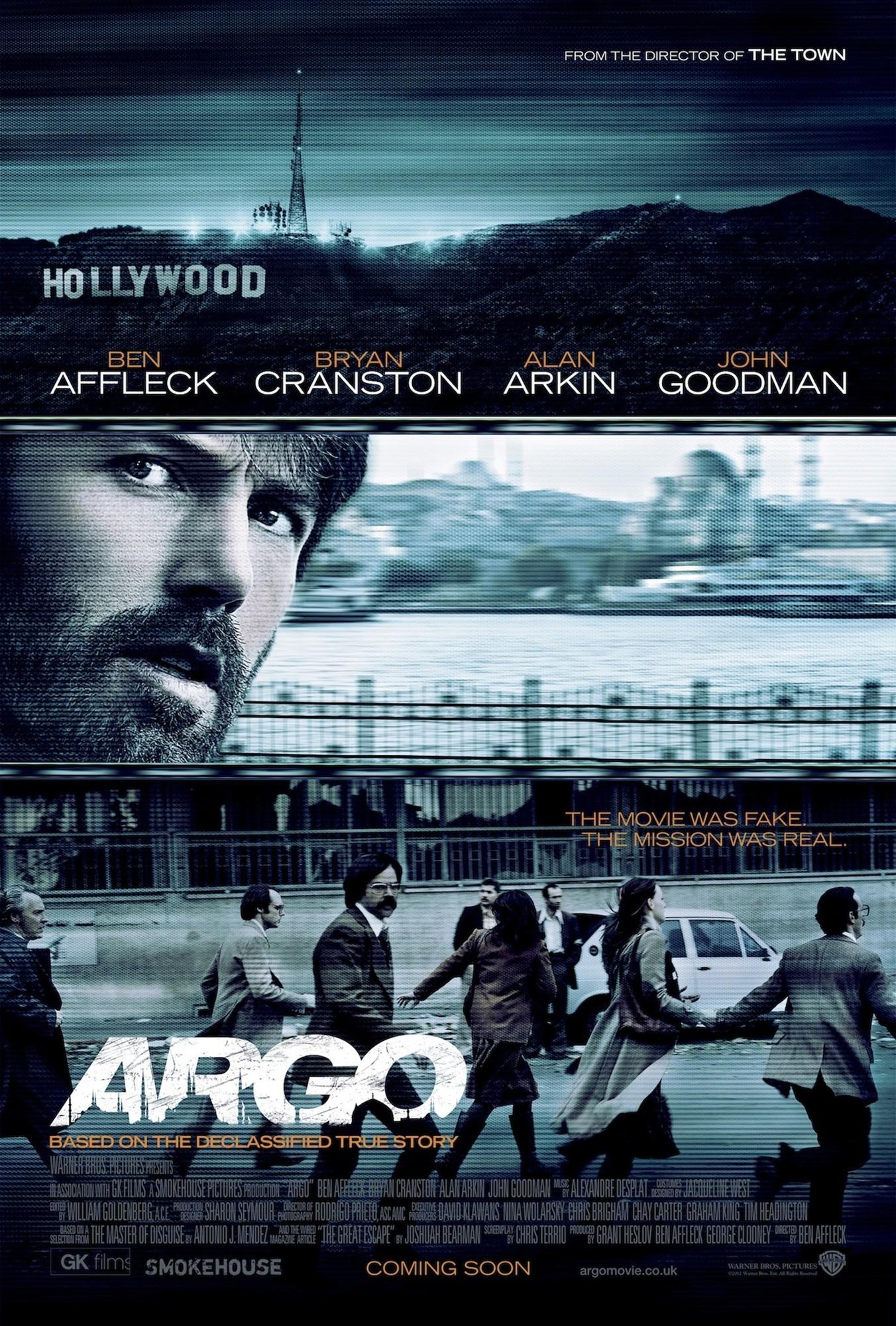
Another in my line of films where I begin by saying “I was not won over by the preview, but went anyway”, and once again I have to say that the film, in this case Argo, was worth it.
Though not as worth it as The Intouchables. Actually, the things that irked me in the preview managed to irritate me in the film itself. The occasional splashes of humour were a cold water pistol shot to the face rather than a refreshing swim in the pool of mirth and there was quite a bit of flag waving even amongst the acknowledgement that the people of Iran probably did have a reason to be aggrieved.
Argo is set at the 70s became the 80s during the Carter presidency. While the West wears bell bottoms and shiny shirts, Iran is undergoing a people’s revolution to overthrow the ruthless dictator who had been ruling and ruthlessly oppressing them. Of course, the ruler was supported by the West, so when the uprising occurs, he flees to the United States and offered asylum, whilst back in Iran, the irate citizenry protest outside the United States embassy in Tehran, eventually storming it and taking the government officials hostage.
Apart from a band of six that make it to the Canadian Ambassador’s house, hiding from the hordes and a hostile government. And so, as the movie starts, Ben Affleck as the Latino Tony Mendez from the CIA, is charged with getting them out.
The scheme he devises to do so is actually quite amusing, and as this is based on a true story, one imagines it is actually what happened. The recreations of Tehran, the anger and moral outrage of the Iranians, and the fear and desperation of the Americans in hiding is all spot on. I am a big fan of Clea DuVall, and so it’s great to see her here in a role where her shell shocked yet mildly annoyed looks can be put to good use.
Meanwhile, back in the States, Affleck puts together a team of Hollywood experts (Alan Arkin once again playing as grumpy old fella and John Goodman playing John Chambers, an in between type person) to help him in his mission, and back at CIA Command, Bryan Cranston gets to run around screaming a lot about getting people out of meetings and tight deadlines and urgency and all sorts of moral outrage of a different, more immediate kind. Kyle Chandler as the Secretary of State is kind of wasted in a minimal role, but he kind of looks like the original guy (as we see over the end credits) so that is… something, at least.
It all comes together really well, stumbling only when it hits the judder bars of Mendez’s estranged wife and his son (which bear almost no relation to anything except in that they are Mendez’s relations) and again, at the end, when a “chase” scene lapses into farce when the previously highly efficient and intelligent Iranian army prove to be completely useless in how to use telephone technology (hopefully that is not giving too much away).
Actually, I seemed to be the only person to find that scene so annoying that I questioned its veracity (i.e., it was made up to make the story more exciting), as my fellow attendees seemed completely satisfied with how events unfolded, so perhaps it was just me being overly critical.
However, at the end of the film, as the credits rolled and ex-President Carter said a few words about the real Mendez, I have to say that I did find that I had enjoyed the film, even if it could have done with a little bit of trimming. And I loved all the references to 80s TV, even if sometimes they did just seem thrown in to give the audience a little giggle.
Verdict: Argo is a really well executed film is let down by a few “dramatized” scenes and some dead weight dialogue, but these impediments are not enough to sink the film entirely. Great work from an impressive cast also helps things immensely. Good work, Mr Affleck, on directing this film! Just, in the future, if you cast aspersions on Kiwis and then claim you didn’t want to, but had to, know that you didn’t have to. 7 Ayatollahs out of 10.
I have to admit that I was not won over by the trailer for The Intouchables, the critically lauded French film about a paralyzed man whose life is flipped, turned upside down when a young black guy who was up to no good started making trouble in his neighbourhood and…. Hold on, that’s the Fresh Prince.
But it is about an unemployed man called Diss (Omar Sy) who has a whole lot of attitude and a love for disco music (they don’t quite portray it like that in the film, I have to say) whose gumption attracts the interest of a wealthy invalid, Philippe (Francois Cluzet), who hires him to bring about a spark of life to his life. Which he does.
And which he does incredibly well. While I had feared The Intouchables would be a painful series of forced “bonding” and sickeningly trite emotion, the two lead actors are incredibly natural and engaging, and the scenes themselves unfold at a slow yet satisfying pace. True, many of the events that create and forge the bond between the two men is only possible due to the fact that Philippe is extremely wealthy, but the friendship that forms seems entirely plausible, thanks to Philippe’s demanding determination and Diss’s complete self confidence. Even a dance scene, where major characters get out and shake their booty, is not the cringeworthy spectacle it could have been but actually seems a bit of fun.
About the only time the film really sets a foot wrong is when a crisis develops in Diss’s life that seems completely manufactured, the record of the film almost audibly “skipping” for a few beats until the discordant section is over and the film gets its groove back.
But, when I say “completely manufactured”, I am of course not sure of what the real events around the story were. Because of course, this film is based on a true story, but exactly that remains “true” and what becomes “story” in these things is always hard to know.
The biggest shock for me (and this in no way spoils the film) was when the final credits rolled and the screen showed the “what happened later” cards, as for a few minutes I struggled to make out who the heck they were talking about. Then, as the “photo now” showed, it suddenly became clear to me that the young black man in the film, Diss, had a completely different name from reality not because of any great reason to protect his identity but because the real “Diss” is actually Arabic (if I am not offending Moroccans by calling them such). It also made Philippe’s move to Morocco make a lot more sense given than knowledge.
That for me raised on of the most interesting questions of the night: why did they make Diss Black rather than keep him of Moroccan descent? It may have been because Omar Sy is an amazing actor and brings an incredible energy to the screen that the casting director decided they could not make the film without him. However, it would be really interested to hear exactly what the rationale was, though I am not sure if I would buy the DVD to get the director’s commentary to find out.
Verdict: The Intouchables is an incredible well crafted movie that had me laughing all the way through. The leads are incredibly engaging, and while the story itself is at times a bit tortured and the way the story unfolds can be seen a couple of kilometres way (this is France, so distance will definitely be metric) and the nigh on two hour duration of the film itself, with all the good will the film generates, I didn’t really mind. 8 fingers out of 10.
Well, 2012 is drawing to an end, and the signs of the end are definitely out there.
Make sure to brush up on your survival skills should civilisation fall: Verdict: The signs and portents indicate the end (of the English language at least, he wrote typing dreadfully) is nigh. Best to know how to ransack a hospital. 6 dissapointments out of 10.
Many years ago now, I was incredibly impressed with a one man show called One Man Star Wars. Ever since then, I have been on the lookout for the man who performed that incredibly amusing piece, hoping that he would return to Wellington one Comedy Fest, or for something similar to arrive.
Because, you see, I live in terror of trying something that is meant to be funny but actually turns out to be totally naff. I have seen a few comedians who have left me stony faced and in mild pain with the valiant yet vain efforts to try and amuse, and for their sakes as well as mine, I have tried to avoid them and so have ended up avoiding going to see most of them, and have mainly gone to see “safe” shows that I already know I will probably like. However, a few months ago, I thought that I had found something “unknown” that might fit the bill.
Potted Potterbills itself a 70 minute production which recounts each of the books in the Harry Potter series, devoting around 10 minutes to each of them. This tickled my fancy for several reasons, mainly the mocking of something that I both enjoyed but could stand to see ridiculed a little, and the fact it might actually be funny.
It started off, in the dark and fairly dingy Opera theatre, in a bad way. First, I was rather disappointed with the seats, as we had paid top dollar for what I thought were prime seats but which ended up being just behind some people with very tall hair and so were not the best for viewing what was going on. Then, the show started with the trope where one of the characters claimed not to have read any of the books or know anything about them, which is a conceit I am not often willing to tolerate in these kinds of things. However, I settled myself down a little, forgave them this niggle, and, ducking my head from side to side to try and avoid the big headed man in front of me, I let the show wash over me.
And it was fun. No terrible pun or chance to play Quiddich was left unturned, and the audience was involved several times as the tale of the teenage wizard was told. At one stage, a couple of kids were brought up on stage to show their mad skillz (a few adults tried, but they were rebuffed) and the audience at large was involved on several occasions too, though mainly as an object of ridicule.
The two performers who ran the show (and occasionally acted as well), Gary Trainor and Jesse Briton, were of the breed who always sound and look like they are having fun – and can look frustrated or angry when their orchestrated circumstances turn against them once again. The major props were mainly ignored for the most part of the show, though much love was given to and for the few puppets that showed their shy heads (the Dobby the House Elf puppet was my favourite – and looked nothing like the Dobby from the films). I was never sure if the odd pause and claim that something was “unscripted” actually was so, but these didn’t distract from the momentum of events and the speed of the gags.
So, in the end, the rather tatty looking environment of the theatre worked for the benefit of the performance, with the occasional bout of rowdiness and stomping of feet unhindered by any sense of keeping the environment in a well maintained state. The audience really got into it (a mentally young couple to my left appreciated it and commented on what was going all the way through it, to the occasional death stare from me) and the lively, amiable spirit of the show, constantly changing, never slowing, made the whole thing almost worth the ticket price. The heads threw the only spanners in the works - though I kind of wanted to throw spanners at them.
Verdict: Potted Potter was lots of fun for fans of Harry Potter, though I am sure those unfamiliar with the novels would have been swept up in the breathless energy and wild zaniness of the show. The main actors were brilliant and I hope they enjoyed their visit to New Zealand, though quite possibly, after all that running around after their show, they may just have ended up heading back to their hotels and crashing down in exhausted heaps. 8 expecto patronums out of 10.